When planning a modern commercial or residential interior, understanding the metal framing cost per square foot is essential for accurate budgeting and structural planning. In the South American market, the transition from traditional timber to galvanized steel furring systems has revolutionized how ceilings are constructed, offering a balance of economic efficiency and long-term durability.
The variance in metal framing cost per square foot is typically driven by material thickness, the gauge of the galvanized steel, and the specific regional standards required for seismic or humidity resistance. By opting for precision-engineered GI Angles, developers can achieve a seamless architectural finish that minimizes waste and optimizes labor costs during the installation phase.
Ultimately, analyzing the metal framing cost per square foot allows architects and contractors to compare the lifecycle value of steel versus wood. While initial material costs vary, the reduction in maintenance and the elimination of organic decay make high-performance suspended steel framing a superior investment for high-end professional environments.

The Economic Impact of Metal Framing Cost Per Square Foot
The global construction industry is increasingly shifting toward modular steel solutions to combat rising labor costs and material instability. When calculating the metal framing cost per square foot, it is not merely about the price of the steel, but the systemic efficiency it brings to the job site, especially in the South American market where precision is paramount.
By utilizing a professional Furring ceiling system with GI Angles, contractors can significantly reduce the "cost per square foot" through rapid installation. The modular nature of these profiles ensures that the structural foundation for gypsum boards is installed with minimal error, thereby reducing expensive rework and material waste.
Defining the Components of Metal Framing Cost Per Square Foot
In simple terms, the metal framing cost per square foot represents the total expenditure required to install a structural steel grid over a specific area. This includes the cost of the GI Angles (25.4 x 25.4 mm), the necessary fasteners, and the labor involved in creating the suspended framework that will eventually support gypsum board cladding.
This metric is crucial for modern industrial needs because it allows for a standardized comparison between different materials. Unlike traditional wood, which has variable pricing based on grade and moisture content, galvanized steel provides a predictable cost model that aligns with international ASTM and regional South American quality standards.
Furthermore, the connection between this cost and architectural quality is direct. A higher investment in precision-rolled profiles often leads to a lower total project cost by ensuring a perfectly smooth ceiling surface, which reduces the amount of joint compound and sanding labor required before final painting or wallpapering.
Core Factors Influencing Metal Framing Cost Per Square Foot
One of the primary drivers of the metal framing cost per square foot is the thickness of the galvanized steel used. Our profiles range from 0.30 mm to 0.60 mm; while thicker steel increases the material cost slightly, it provides the necessary load-bearing capacity for heavier ceiling fixtures and larger spans, reducing the need for additional support members.
Corrosion resistance is another critical factor that impacts the long-term metal framing cost per square foot. High-grade galvanization prevents rust and oxidation, particularly in humid tropical climates common in South America, ensuring that the structure does not fail prematurely and require costly replacements.
Finally, customization and logistics play a role. By offering custom lengths beyond the standard 3.0 meters, we help contractors minimize onsite waste. When waste is reduced, the effective metal framing cost per square foot drops because more of the purchased material is actually utilized in the final installation.
Comparing Metal Framing Cost Per Square Foot Across Systems
When evaluating the metal framing cost per square foot, it is essential to compare the GI Furring system against traditional wood framing. Wood is often perceived as cheaper initially, but it is prone to termites, rot, and uneven warping, which leads to joint issues and surface imperfections in the ceiling.
The modularity of the South American GI Angle system allows for a "fast-track" installation process. Because the profiles are precision-engineered, they snap together with minimal adjustment, drastically lowering the labor component of the total metal framing cost per square foot compared to the slow, manual cutting required for timber.
System Efficiency Comparison for Metal Framing Cost Per Square Foot
Global Applications of Optimized Metal Framing Costs
The application of an optimized metal framing cost per square foot is most evident in large-scale commercial projects. In modern office buildings and retail spaces across South America, the demand for a "plain" minimalist ceiling is high. The concealed grid design of our GI Angle system allows for a perfectly smooth surface, making it the ideal choice for spaces requiring high-end painting or wallpapering.
Beyond commercial hubs, this system is invaluable in hospitality projects like hotels and shopping malls. The stability provided by precision-rolled profiles ensures that heavy gypsum boards and integrated lighting fixtures are supported safely, ensuring that the initial metal framing cost per square foot translates into a low-maintenance, high-safety environment for the public.
Long-term Value of Strategic Metal Framing Investment
When analyzing the long-term value of metal framing cost per square foot, the focus shifts from procurement to lifecycle costs. Steel is non-combustible, which significantly improves the fire rating of a building—a factor that can lower insurance premiums and increase the overall safety and dignity of the occupants.
Moreover, the sustainability of galvanized steel is a key advantage. Unlike wood, which contributes to deforestation, steel is highly recyclable. Investing in a high-quality framing system reduces the need for frequent renovations, meaning the metal framing cost per square foot is amortized over several decades rather than a few years.
This strategic investment also fosters trust between the contractor and the client. By providing a structural foundation that does not sag, warp, or succumb to humidity, the builder ensures a professional finish that maintains its aesthetic integrity, proving that the most efficient metal framing cost per square foot is one that prioritizes quality over the lowest possible price.
Future Innovations in Metal Framing Cost Efficiency
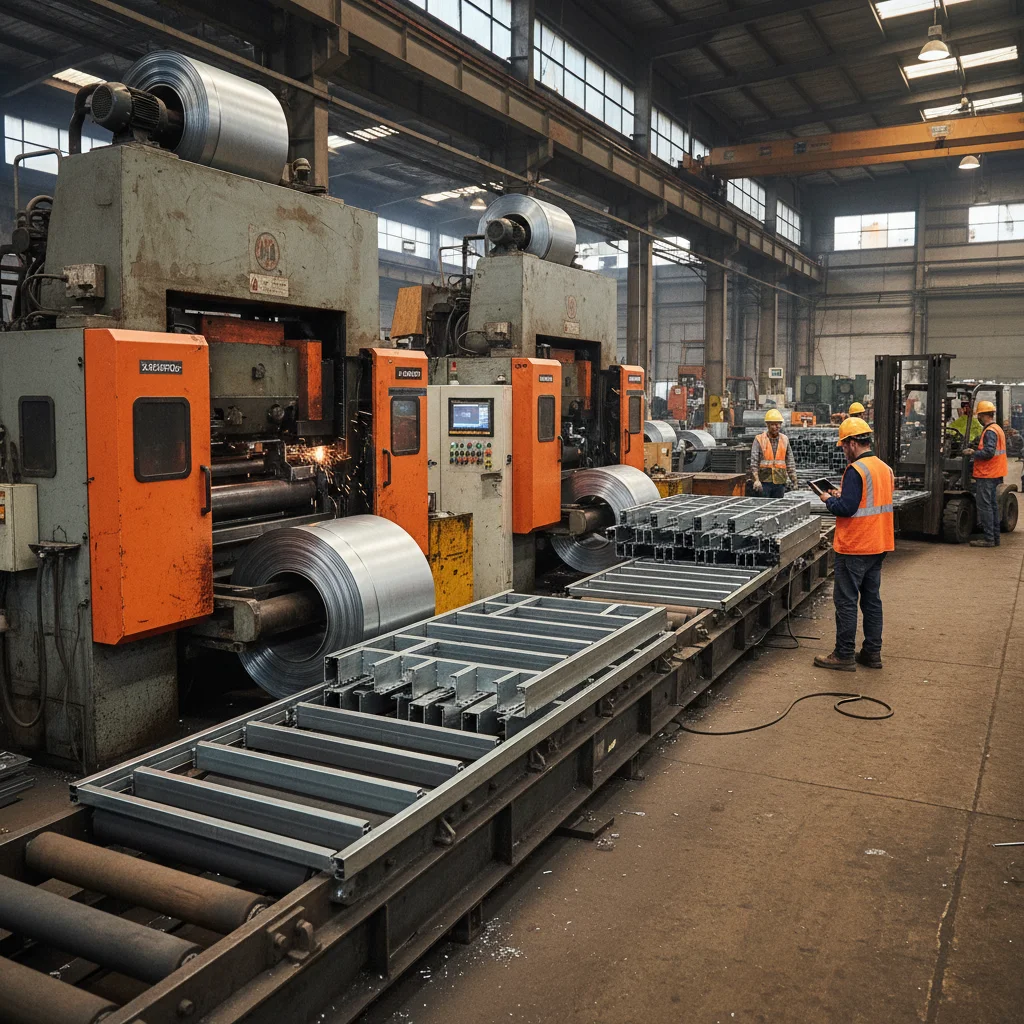
The future of metal framing cost per square foot lies in the integration of automation and digital precision. Our use of automated rolling mills ensures 100% dimensional accuracy, which eliminates the variability that often leads to onsite waste and unexpected cost overruns.
We are also seeing a trend toward "lean construction," where inventory control and real-time tracking of GI profiles ensure that materials arrive exactly when needed. This "just-in-time" logistics approach reduces storage costs and prevents material damage, further optimizing the overall metal framing cost per square foot for large-scale developers.
As green building certifications become mandatory in more South American cities, the demand for eco-friendly, recyclable steel framing will grow. Future innovations will likely focus on even thinner yet stronger alloys that maintain structural stability while reducing the weight and the raw material cost per square foot.
Comparison of Framing Systems for Metal Framing Cost Per Square Foot Analysis
| Framing Material |
Installation Speed |
Durability Rating |
Lifecycle Value |
| Traditional Wood |
Slow / Manual |
3/10 (Low) |
High Maintenance |
| Standard GI Angle |
Fast / Modular |
8/10 (High) |
Low Maintenance |
| High-Gauge Steel |
Fast / Modular |
10/10 (Max) |
Maximum Lifespan |
| Custom Profile |
Optimized |
9/10 (High) |
Low Material Waste |
| Aluminum Grid |
Moderate |
7/10 (Med) |
Premium Cost |
| Composite Beam |
Slow |
6/10 (Med) |
Moderate Value |
FAQS
The cost is calculated by summing the price of the galvanized steel profiles (based on thickness, e.g., 0.30mm-0.60mm), the number of connectors required for the specific span, and the labor hours for installation. By using a modular Furring system, you can reduce the labor cost per square foot significantly compared to traditional framing.
Yes, thickness (ranging from 0.30 mm to 0.60 mm) influences both the material price and the load-bearing capacity. While 0.60 mm profiles are slightly more expensive, they may reduce the overall cost per square foot by allowing for wider spacing between supports without compromising ceiling stability.
Absolutely. Standard lengths are 3.0 meters, but providing custom lengths based on your project blueprints minimizes onsite cutting and material waste. Reducing waste directly lowers the effective cost per square foot, as you only pay for the material that is actually installed.
In high-humidity areas, such as many parts of South America, the lifecycle cost of GI steel is far lower. Wood is prone to rot and termites, necessitating frequent repairs. Galvanized steel's rust resistance ensures the structure lasts decades, making the long-term cost per square foot much more economical.
A concealed grid system allows gypsum boards to be attached directly to the steel profiles, creating a seamless surface. This reduces the cost of finishing materials (like joint compound) and labor for sanding, which lowers the total cost per square foot for the finished ceiling.
Yes, it is specifically designed for modern offices, hotels, and malls. Its ability to support professional painting and wallpapering while maintaining a perfectly flat surface makes it the gold standard for commercial projects prioritizing a clean, minimalist aesthetic and structural longevity.
Conclusion
In summary, understanding the metal framing cost per square foot requires looking beyond the initial purchase price to include installation speed, material waste, and long-term durability. The transition to galvanized steel GI Angles for suspended ceiling systems offers a superior alternative to traditional materials, providing a fire-resistant, rust-proof, and structurally stable foundation that ensures a flawless architectural finish.
As the construction industry continues to evolve toward modularity and sustainability, investing in precision-engineered steel framing is the most reliable way to optimize project budgets while enhancing building quality. We recommend that architects and contractors prioritize regional standards and material specifications to ensure the lowest lifecycle cost per square foot. For professional guidance and a tailored quote, visit our website: www.jinkaibm.com.