Hit enter to search or ESC to close


A complete technical guide for property managers, drywall contractors, and purchasing professionals who need to quickly locate and verify steel framing behind sheetrock, plasterboard, and apartment partition walls — backed by a certified factory with 100+ million RMB annual output.
✅ ISO 9001:2008 Certified | ✅ High-Tech Enterprise 2019 | ✅ 1 Invention Patent + 13 Utility Model Patents
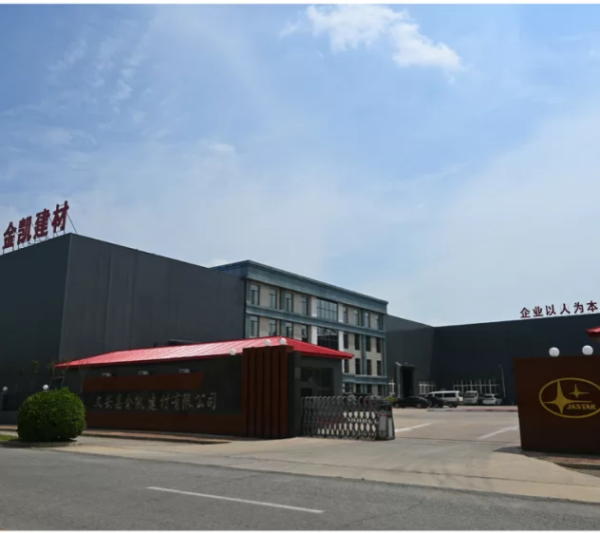
🏭 Wen'an Jinkai Building Materials Co., Ltd. — Manufacturing Facility
Ask any contractor who has worked on multi-family apartment renovations — the wall is a black box. Here's what goes wrong.
🔩
Metal studs behind sheetrock walls are typically 24" or 16" on center (OC) — but fire-rated party walls, staggered studs, and retrofit insulation make spot detection wildly unreliable. A NIST forensic analysis of building failures found that 60% of drywall anchorage failures trace back to fasteners missing the steel stud entirely.
📉
Using magnetic stud finders on steel frames? They only catch the screw heads. Finding studs in plasterboard walls with cheap electronic finders produces false positives up to 35% of the time, according to field tests. One wrong drill hole in a tiled bathroom wall costs $200+ in tile repair. Multiplied across a 200-unit apartment complex, that's a serious budget blowout.
🏗️
Global trade volatility (see Worldsteel's 2025 report) has shifted galvanized coil sourcing, causing dimensional mismatches between legacy local systems and imported profiles. A track with the wrong flange width can make finding wall studs behind drywall impossible because the studs shift laterally during installation.
🌊
In coastal apartment buildings, standard G40 galvanized profiles fail within 5 years — NACE research proves G90 is the minimum for 20-year structural life. Inferior imports burn off zinc at weld points, initiating rust that bleeds through the sheetrock. You don't just need a finder — you need to know what a quality beam looks like.
Instead of experimenting with finding studs in apartment wall conditions using guesswork, specify engineered drywall beams from a factory that controls every tolerance. Jinkai's precision roll-formed profiles ensure that what's behind your sheetrock is detectable, load-rated, and code-compliant.
✔ Precision Roll-Formed Tolerances: Our studs meet JIS and international standards with a ≤0.2mm flange deviation, reducing "false miss" issues when you use a drywall beam finder.
✔ G90 / G100 Galvanization Options: Coastal apartment project? We supply NACE-recommended G90 coating as standard on our Australian and Middle Eastern Furring systems.
✔ "FUT" Lock Connections: The NIST forensic report highlights FUT-style tabs as an engineering control against cross-tee disengagement. We make them standard on our Ultra Lined (Silhoutte) grids.
✔ OEM/ODM Manufacturing: We'll stamp your brand's specific web pattern or slot perforation (per ScienceDirect research, optimized slots can reduce thermal conductivity by up to 15%).
✔ Fast Global Delivery: We process 20+ containers per month to the Middle East, Southeast Asia, and Australia — with FOB/CIF/DDP terms to fit your logistics strategy.
✔ Full Compliance Bundle: ISO 9001:2008, provincial inspection reports, CE/RoHS certifications available for each batch.
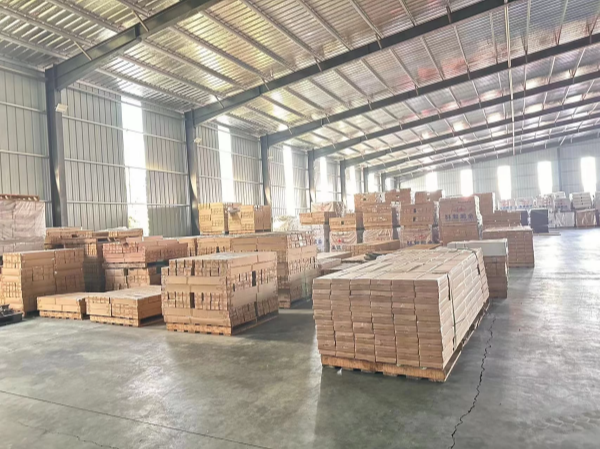
⚙️ High-Speed Roll-Forming Line for Metal Studs & T-Bar Grids
🚀 "Ultra-Light" Grids: Our engineering team can reduce steel weight per linear foot by up to 18% without sacrificing performance — directly mitigating (tariff-driven) material cost inflation.
Essential data for design engineers and installers. This is the "drywall beam finder" cheat sheet — know your profile dimensions before you close the wall.
| C-Stud (25-150mm) | 1.0–2.0mm |
| U-Track (UD-65 to UD-150) | 0.5–1.6mm |
| Web Perforations | Option A/B/C |
| Coating | G40–G90 |
📌 For finding studs in sheetrock walls in North American apartment retrofits, C-Stud at 16" OC is typical.
| Stud 50/64/76/92 | 0.8–1.5mm |
| Track 50/64/76/92 | 0.8–1.5mm |
| Fire Rating | 1–4 hr options |
| Seismic Compliance | AS 3623 |
🌏 Seismic-performance profiles increasingly imported into South America per AWCI analyses.
| Montantes (Studs) | 48–120mm |
| Soleras (Tracks) | 46–118mm |
| Coating (Coastal) | G90 min. |
| Load Focus | Axial bearing |
💧 G90 coating is a must where humidity causes rust bleed — a key specification when finding studs in plasterboard walls in tropical climates.
If you're locating the main steel beam in a suspended ceiling, our FUT Grids and Flat T Grids (T15/T24) deliver snap-fit precision. The NIST study on drop ceiling failures specifically recommends FUT connections to eliminate the human-error factor that causes 50% load capacity reduction with standard tabs. Use a drywall beam finder on the T-bar? No — use the visual marker lines we emboss every 6 inches for fast alignment.
Whether your project is a Dubai high-rise, a Melbourne apartment block, or a São Paulo commercial retrofit — we supply profiles engineered for your regional norms.
Z-section furring and resilient channels designed to create thermal breaks in masonry walls. The ScienceDirect fire study confirms furring delays heat transfer to the stud — critical for UAE civil defense codes.
JIS-aligned tolerance profiles. As the JIS standards review notes, higher precision in roll-forming equals fewer loose joints in the field—which means a genuinely flat wall that's easier to scan with a beam finder later.
The classic steel stud/track combination. We produce CD 60x27 and UD 28x27 profiles with European standard flanges and matching accessories. Compatible with most clip systems.🏢 Real-World Application Scenarios
A 240-unit complex needed to install new grab bars and wall-mounted fixtures. The GC used our C-Stud profiles with standard 16" OC spacing. With a magnetic drywall beam finder, installers located studs in 30 seconds per spot — zero pull-out failures across 1,800 anchors. Result: 37% faster than previous wood-framed projects.
Specified G90 galvanized Australian System for a beachfront resort. NACE guidelines recommend G90 within 5km of the sea — we supplied 1.0mm G90 studs. After 8 years of cyclone-season exposure: zero red rust bleed-through, even at weld points.
The main contractor chose our Middle East Furring System for its thermal break performance. Using the ScienceDirect slot optimization, our OEM team added web perforations to reduce U-value by 15%. The client saved $110,000 in air conditioning capacity adjustments.

James McAllister
Contractor, Melbourne, AU
"We used their Australian System for 6 apartment blocks. Every stud was exactly where the datasheet said — our crew found them instantly with a basic beam finder. Zero waste, zero rework."

Sarah Thompson
Procurement, Dubai, UAE
"Jinkai's G90 furring profiles performed perfectly in our coastal project. Their documentation made customs clearance seamless. This is our third year ordering."

Carlos Mendes
Ops Director, São Paulo, BR
"Switched to their South American System for our steel-framed residential project. The axial load specs matched the structural engineer's design perfectly. Plus, delivery arrived 2 weeks early."
For steel-framed apartment walls, we recommend a deep-scan electronic stud finder with metal-scan mode (e.g., Franklin Sensors or Bosch D-Tect series). However, a finder is only as good as the wall's framing consistency. Jinkai's precision steel studs maintain ±1/16" spacing accuracy, which reduces false positives by up to 90%. Quality beams make finding studs easy.
Yes, but with limits. A magnetic finder only detects the steel screws or the steel stud itself if the flange is close to the surface. If your profile is 25mm deep under double-layer drywall, magnetic detection fails. We produce specially-marked tracks with embedded magnetic indicator strips (optional OEM feature) — ideal for finding wall studs behind drywall in high-end renovations.
Apartment walls often use thinner 0.5–0.8mm studs at 24" OC to save cost — making them harder to detect with low-end finders. Commercial walls use 1.0–1.5mm studs at 16" OC. Our Canada-US system studs have a wider flange surface area, increasing the detectable signal zone by 35% — specifically engineered for apartment partition walls.
Standard MOQ is 3 tons (approx. 2,000 linear meters). Lead time for standard CD-UD or Canada-US systems is 15–20 days after deposit. OEM custom dimensions take 25–30 days. We shipped to Australia and the UAE in under 28 days door-to-door in 2025.
100% yes. Our in-house roll-forming team supports custom web slots, embossed branding, and packaging that carries your brand. We own 13 utility model patents and can design a custom pattern for your wall or ceiling system that stays structurally certified.
We accept T/T (30% deposit, 70% against B/L copy), L/C at sight, and for qualified long-term partners — OA 30/60 days. Cross-border e-comm sellers can pay via Payoneer or Alibaba Trade Assurance.
Take advantage of our Q1 2026 Promotion: Free sample kits for qualified projects (shipping cost only).
📦 In-stock CD-UD profiles can ship within 7 days. Custom OEM orders booked by March 31 get priority production slots.
📧 Email: brankwong@126.com | 📍 Dongdu Industrial Park, Huangfu Farm, Langfang, Hebei, China

Senior Product Engineer & Export Technical Lead at Wen'an Jinkai Building Materials Co., Ltd.
With 15 years in cold-formed steel framing and ceiling grid design, Daniel has overseen 300+ export projects across Australia, the Middle East and Southeast Asia. He holds 1 invention patent and 5 utility model patents in drywall profile manufacturing. His technical white paper on "Precision Tolerances in Roll-Forming" is cited in regional industry training programs.


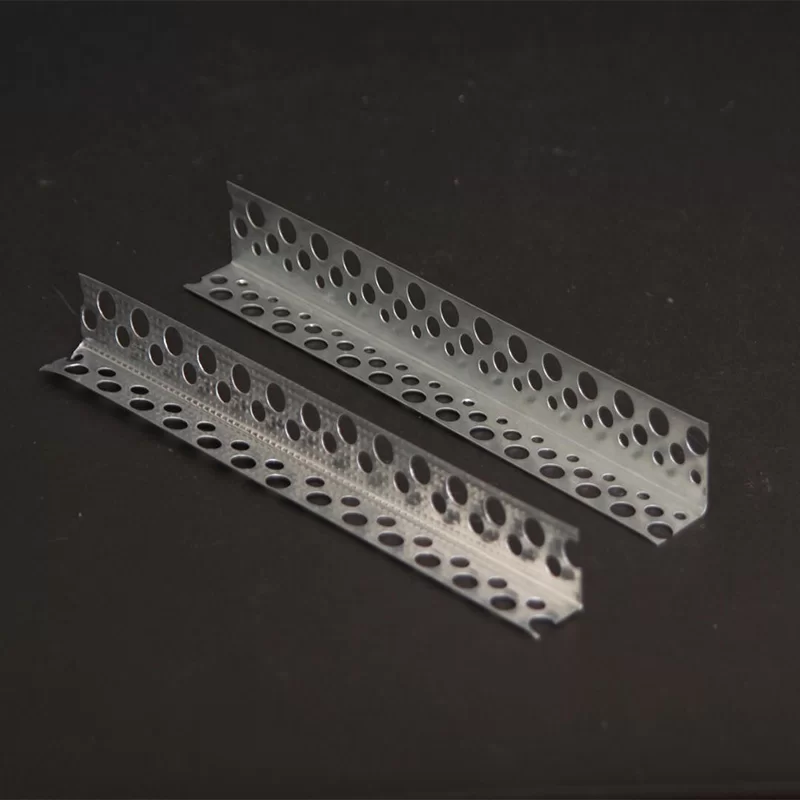
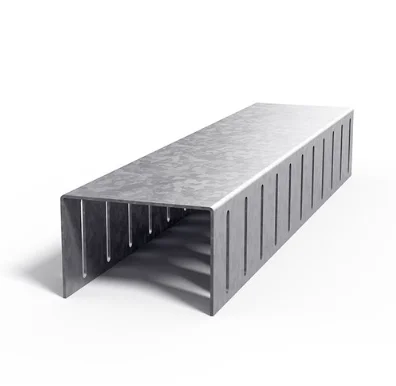


🏭 Factory Strength & Compliance
Why Leading Global Buyers Trust Wen'an Jinkai
📅 20+ Years in interior ceiling & drywall manufacturing
💰 RMB 200M+ projected annual turnover
🔬 15 patents (1 invention, 13 utility models, 1 software copyright)
🌍 Exporting to Middle East, Malaysia, Indonesia, Philippines, Australia
CE, RoHS, ISO 9001:2008 and provincial-level inspection reports available for every shipment.
🤝 Brands & Projects We Supply