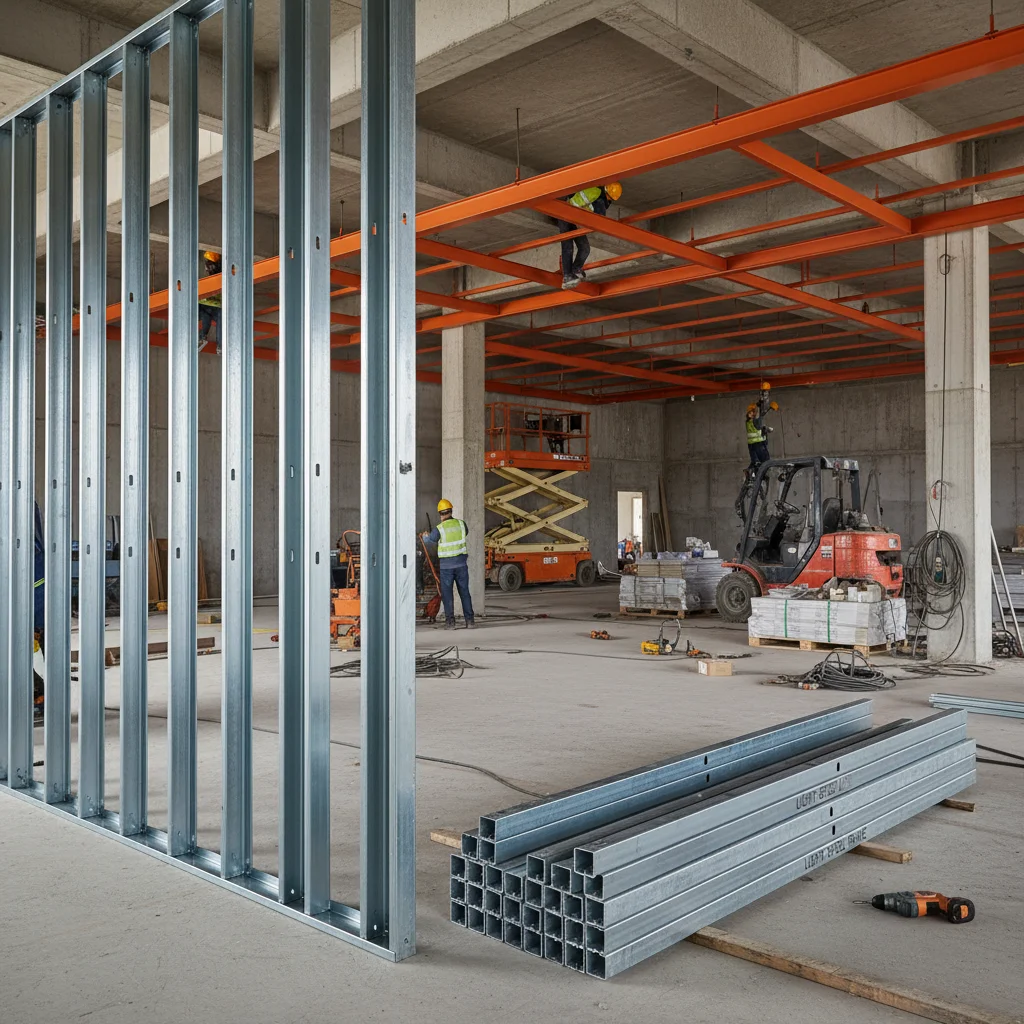
Understanding the financial and structural implications of modern framing is essential for any large-scale construction project. When developers analyze the cost of 2x4 metal studs, they aren't just looking at a price tag per piece, but rather the total value proposition including installation speed and material longevity. In the competitive landscape of commercial building, selecting the right perimeter and support components is what separates a basic build from a professional architectural achievement.
The global shift toward steel-based framing is driven by a need for precision and fire safety, which often offsets the initial material investment. While the market fluctuates, the cost of 2x4 metal studs remains a primary benchmark for budgeting interior partitions and suspended ceiling systems. By integrating high-performance accessories, such as powder-coated wall angles, builders can further enhance the structural integrity and aesthetic finish of these steel systems.
For professionals seeking to optimize their budget without sacrificing quality, it is crucial to evaluate the total system cost rather than isolated components. Whether you are managing a high-rise office or a residential complex, calculating the cost of 2x4 metal studs alongside the cost of premium edge trims ensures a flawless, professional finish that meets international construction standards.

Material Engineering and the Cost of 2x4 Metal Studs
The fundamental driver behind the cost of 2x4 metal studs is the quality of the raw material used in production. High-strength cold-rolled steel is the industry standard, providing the necessary rigidity to prevent sagging and structural failure over time. The precision of the rolling process ensures that every profile maintains a consistent thickness—typically ranging from 0.25mm to 0.50mm for supporting accessories—which directly impacts the overall stability of the drywall system.
Furthermore, the addition of surface treatments, such as premium powder coating, adds a layer of value that transcends the basic cost of 2x4 metal studs. Unlike standard paint, powder coating is baked onto the metal, creating a hard shell that is highly resistant to chipping and corrosion. This engineering choice reduces the risk of rust in humid environments, ensuring that the architectural edge remains pristine throughout the building's lifecycle.
Global Economic Factors Influencing Steel Framing Costs
The pricing of construction materials is rarely static, as it is tied to the global commodities market. The cost of 2x4 metal studs is heavily influenced by the price of iron ore and the energy costs associated with steel milling. When global supply chains face disruptions, the cost of logistics and raw material sourcing can lead to volatility in the final market price for contractors and developers.
Regional standards also play a significant role in pricing structures. For instance, systems designed for the North American (Canada-US) market may have different gauge requirements compared to the Australian Drywall System or South American standards. These technical variations mean that the cost of 2x4 metal studs can vary based on the specific load-bearing requirements and building codes of the destination country.
To mitigate these fluctuations, many large-scale projects enter into strategic partnerships with manufacturers who utilize optimized supply chains. By sourcing directly from mills that offer consistent raw material quality and export-standard packaging, companies can stabilize their procurement costs and avoid the premiums associated with middle-man distributors.
Structural Performance vs. Initial Investment
When budgeting for a project, it is common to focus solely on the initial cost of 2x4 metal studs. However, a narrow focus on the lowest price often leads to the selection of inferior steel grades that are prone to deformation. High-performance systems prioritize cold-rolled steel to ensure that the frame can support the weight of drywall and insulation without compromising the architectural alignment.
The true value is found in the synergy between the main studs and the perimeter accessories. While the cost of 2x4 metal studs covers the vertical support, the use of L, W, and F angles provides the essential fixing points for suspended ceilings. Investing in powder-coated angles prevents the "edge-rot" often seen in cheaper, painted alternatives, effectively increasing the lifespan of the entire installation.
Ultimately, the return on investment is measured by the reduction in labor and maintenance. Precision-engineered components ensure a "snap-fit" installation, which can reduce onsite labor time by up to 15%. When this efficiency is factored into the total project spend, the initial cost of 2x4 metal studs becomes a secondary consideration to the overall operational savings.
Comparative Analysis of Framing System Value
To truly understand the economic impact of material choice, one must compare standard painted profiles with premium powder-coated systems. While the upfront cost of 2x4 metal studs remains similar across tiers, the ancillary components—like wall angles—create a massive difference in long-term durability and visual quality.
A professional-grade system offers superior impact resistance, meaning that during the chaotic phase of construction, the profiles are less likely to be scratched or dented. This reduces the need for costly replacements and touch-ups before the final handover of the building.
Comparison of System Value Metrics
Application of High-Performance Wall Angles in Steel Systems
In practical application, the cost of 2x4 metal studs is only one part of the framing equation. The use of specialized L-shaped, W-shaped, and F-shaped angles allows for the creation of complex suspended ceiling grids and seamless drywall transitions. These components act as the critical perimeter channel, ensuring that the weight of the ceiling is evenly distributed and securely anchored to the walls.
Across diverse global markets—from the Middle East's furring systems to the sophisticated grids of the Canada-US system—these powder-coated angles provide a uniform surface finish. This architectural precision is vital for high-end commercial spaces where visual perfection is required, ensuring that there are no visible gaps or sagging edges at the perimeter of the room.
Long-Term Maintenance and Life Cycle Costing
When analyzing the life cycle of a building, the initial cost of 2x4 metal studs is eclipsed by the cost of maintenance. Traditional painted steel often begins to oxidize at the joints and edges within a few years, especially in coastal or humid regions. This leads to unsightly rust streaks on the drywall and potentially compromised structural integrity.
By utilizing powder-coated cold-rolled steel, the maintenance interval is significantly extended. The high resistance to scratching and chipping means that the protective layer remains intact even under mechanical stress. This reduces the frequency of renovations and ensures that the building retains its value over decades rather than years.
Furthermore, the consistency of the steel thickness prevents long-term sagging. When builders invest in a system where the studs and angles are engineered to the same rigorous standards, they eliminate the "weak links" in the assembly, leading to a higher safety factor and lower insurance premiums for the facility owner.
Future Trends in Sustainable Metal Construction
The future of construction is leaning heavily toward sustainability and the circular economy. The cost of 2x4 metal studs is becoming more attractive as the industry moves away from timber due to deforestation concerns and termite vulnerabilities. Steel is 100% recyclable, meaning that at the end of a building's life, the framing can be reclaimed and repurposed without losing structural properties.
Innovation in powder coating is also reducing the environmental impact of metal finishing. New, low-VOC (Volatile Organic Compound) coatings are being implemented, aligning with green building certifications like LEED. This transition ensures that the high-performance edges and supports used in modern ceilings are as eco-friendly as they are durable.
Digital transformation is also playing a role, with BIM (Building Information Modeling) allowing architects to calculate the exact cost of 2x4 metal studs and required angle quantities down to the millimeter. This precision minimizes material waste on site, further reducing the overall project cost and the environmental footprint of the construction process.
Analysis of Metal Stud System Performance by Material Grade
|
Material Specification
|
Corrosion Rating (1-10)
|
Installation Speed
|
Relative System Cost
|
| Standard Painted Steel |
4 |
Standard |
Low |
| Galvanized Steel |
7 |
Standard |
Medium |
| Powder Coated Cold-Rolled |
10 |
Fast |
Medium-High |
| Aluminum Profiles |
9 |
Very Fast |
High |
| Stainless Steel |
10 |
Slow |
Very High |
| Custom Alloy Profiles |
8 |
Standard |
High |
FAQS
Thickness directly impacts both the material volume and the structural load capacity. Heavier gauges (thicker steel) increase the cost of 2x4 metal studs but are necessary for load-bearing walls or high-ceiling installations to prevent bowing. For non-load-bearing partitions, a thickness range of 0.25mm to 0.50mm for supporting angles is typically sufficient and more cost-effective.
Yes, significantly. Powder coating is baked onto the metal, creating a durable, hard shell that resists chipping and corrosion far better than liquid paint. While the initial cost might be slightly higher, it eliminates the need for frequent repainting and prevents rust from bleeding through the drywall, providing a much higher long-term return on investment.
L angles are the standard L-shaped brackets used for the perimeter edges of ceilings. W angles provide a wider profile for specialized structural support needs. F angles are specifically designed for edge trimming and framing transitions. Choosing the correct angle based on the system requirement ensures a secure fixing point and a professional architectural finish.
Absolutely. High-quality manufacturers produce profiles compatible with various global systems, including those for the US, Canada, Australia, South America, and the Middle East. This allows contractors to maintain a consistent standard of quality and cost efficiency regardless of the project's geographical location.
The most effective way to reduce costs is to optimize the supply chain and reduce onsite waste. By purchasing standard lengths (such as 3000mm) and sourcing directly from manufacturers who provide export-standard packaging, you can lower the cost of 2x4 metal studs and accessories while ensuring the materials arrive undamaged and ready for rapid installation.
Depending on the environment, a powder-coated cold-rolled steel frame can last several decades. Because it is resistant to humidity and corrosion, it avoids the structural degradation seen in wood or low-grade painted steel. Regular inspections are rarely needed, making it the ideal choice for commercial properties focusing on low maintenance.
Conclusion
In summary, while the cost of 2x4 metal studs is a critical starting point for any construction budget, the true value of a framing system lies in the quality of its materials and the precision of its accessories. By integrating high-strength cold-rolled steel with premium powder-coated wall angles, developers can ensure a structurally sound, corrosion-resistant, and aesthetically flawless finish. The synergy between the main framing and the perimeter trim is what ultimately determines the longevity and professional quality of the suspended ceiling and drywall project.
Looking forward, the industry will continue to move toward sustainable, recyclable steel solutions that offer both economic efficiency and environmental responsibility. We recommend that project managers prioritize total life-cycle value over the lowest initial price to avoid future maintenance pitfalls. For high-performance drywall and ceiling systems that meet global standards, we invite you to explore our professional-grade solutions. Visit our website: www.jinkaibm.com