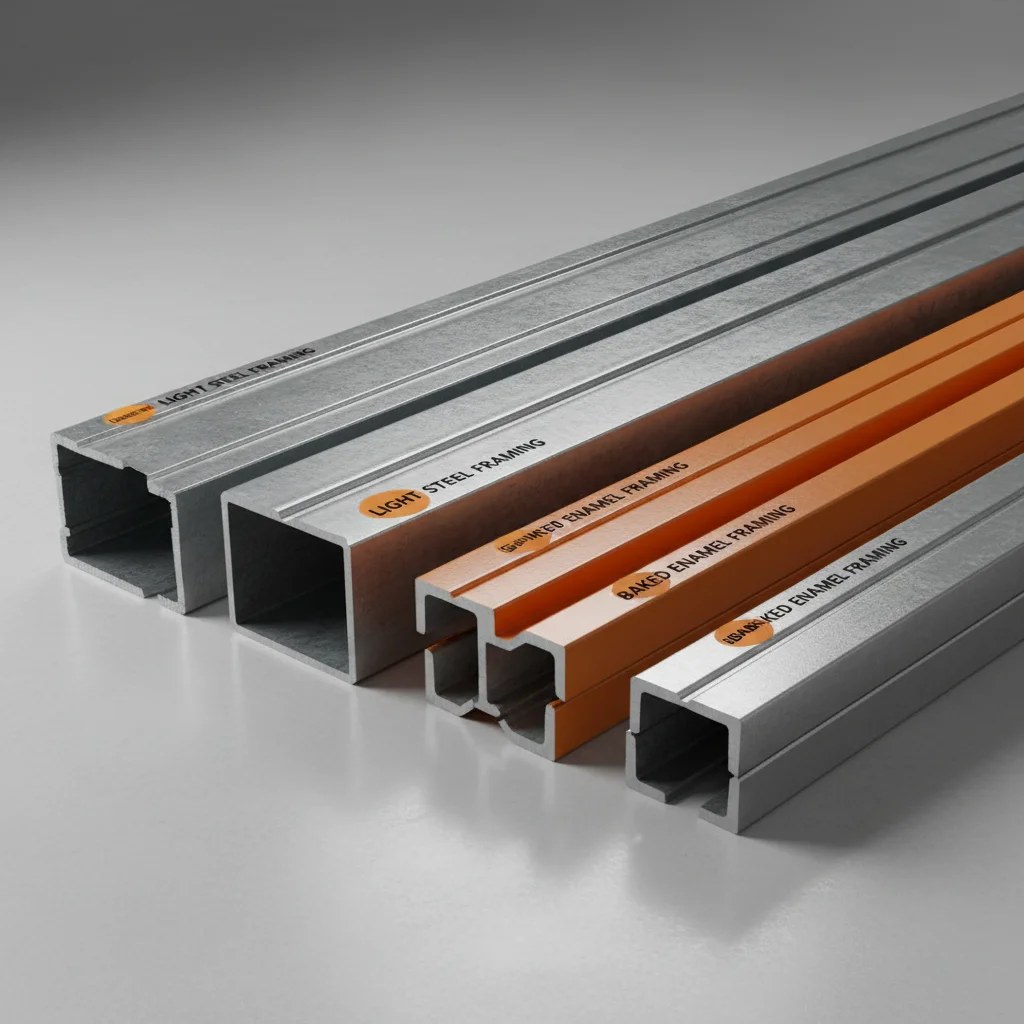
When budgeting for commercial framing, the 16 gauge metal studs price often becomes a pivotal variable that determines the structural integrity and the total cost of a project. Unlike thinner light-gauge options, 16 gauge steel provides the necessary load-bearing capacity for higher walls and heavy-duty applications, though this strength comes with a distinct pricing premium.
Understanding the cost drivers behind these profiles requires an analysis of steel market volatility, galvanization standards, and the specific requirements of international building codes. For procurement managers, the goal is not simply to find the lowest unit price, but to optimize the balance between material thickness and total installation efficiency.
By examining the relationship between gauge thickness and structural performance, developers can better predict expenses and avoid the costly mistakes of under-specifying materials in high-stress zones of a building's layout.

Decoding the Cost Structure of Heavy-Duty Metal Studs

The pricing of 16 gauge metal studs is fundamentally tied to the weight of the raw material. Because 16 gauge steel is significantly thicker than the standard 20 or 25 gauge used in non-load-bearing partitions, the raw steel consumption per linear foot is higher, directly elevating the base cost.
Beyond raw tonnage, the coating process—specifically the zinc coating G60 used in high-standard galvanized steel—adds a layer of cost but ensures long-term corrosion resistance. For manufacturers like Wen'an Jinkai Building Materials Co., Ltd., utilizing automated production lines helps mitigate some of these costs by increasing precision and reducing material waste during the roll-forming process.
Furthermore, market fluctuations in the global steel index and shipping logistics for heavy profiles influence the final quote. Procurement teams must account for these variables when transitioning from the design phase to the actual purchase of drywall steel profiles.
Structural Advantages of 16 Gauge Steel Framing
The primary value proposition of 16 gauge steel is its exceptional stiffness-to-weight ratio. In structural terms, the increased thickness allows the stud to resist buckling under higher vertical loads, making it suitable for load-bearing walls that support upper floors or heavy roof assemblies.
From a technical standpoint, these profiles offer superior screw-holding strength compared to thinner gauges. This is critical when installing heavy cladding or dense soundproofing materials, as it prevents the framing from warping or the fasteners from pulling through the metal web.
Additionally, the durability of 16 gauge studs reduces the likelihood of denting or deformation during the construction process, leading to flatter walls and a higher quality finish for the final drywall installation.
Critical Application Scenarios for Heavy Gauge Profiles
Heavy-duty 16 gauge studs are typically specified for environments where standard light-gauge framing would fail. High-traffic commercial corridors, industrial warehouses, and multi-story residential complexes are the most common application sites.
In medical facilities, these studs are used to support heavy lead-lined shielding for X-ray rooms. Similarly, in luxury hotels, they provide the rigid framework necessary for expansive ceiling T-bars and heavy decorative panels without the risk of sagging over time.
The use of these profiles is also essential in regions with strict seismic codes, where the increased material thickness provides the ductility and strength required to absorb energy during structural shifts, ensuring the safety of the building occupants.
Comparing Load Capacity vs Material Investment
When evaluating the 16 gauge metal studs price, it is helpful to view the cost as a function of performance. While the initial material cost is higher than 20 gauge steel, the load-bearing capacity increases disproportionately, allowing for wider stud spacing in some designs.
This efficiency can lead to a reduction in the total number of studs required for a specific wall length, potentially offsetting a portion of the higher per-unit cost. The following metrics illustrate the relative performance gains when moving to a heavier gauge.
16 gauge metal studs price Performance Metrics
The data indicates that while the investment increases, the gains in vertical load capacity and deflection resistance make 16 gauge the only viable choice for structural partitions, whereas lighter gauges are relegated to simple dividers.
Strategic Procurement Guidelines for Large Scale Projects
Procuring heavy-gauge steel requires a more rigorous vetting process than standard components. Buyers should prioritize suppliers who can provide mill certificates ensuring the steel meets G330 standards and that the zinc coating is uniform across the entire profile.
To optimize the 16 gauge metal studs price, project managers should consider bulk ordering based on total project tonnage rather than piece-by-piece. Coordinating the delivery of studs alongside other drywall steel profiles and ceiling T-bars can also significantly reduce freight costs.
Finally, ensure that the supplier uses automated production lines. This ensures a 100% qualified rate in size and finish, which prevents installation delays caused by warped or out-of-spec components on the job site.
Future Shifts in Steel Framing Material Efficiency
The industry is gradually moving toward "precision-engineered" framing. This involves using software to determine the exact minimum gauge required for each specific wall section, rather than applying 16 gauge uniformly across an entire floor.
This hybrid approach may lead to a reduction in overall material costs while maintaining structural safety. We are also seeing a trend toward higher-strength alloy steels that could provide 16 gauge performance with slightly less mass, potentially lowering the total weight and cost of the framing system.
As automation in manufacturing increases, the lead time for customized heavy-gauge profiles is expected to decrease, allowing for just-in-time delivery and reducing the need for extensive on-site storage of heavy materials.
Selection Matrix for Drywall Steel Profiles
Choosing the right profile depends on a trade-off between budget, load requirements, and the intended lifespan of the structure. The following matrix compares the 16 gauge option against other common industry standards.
Depending on whether the project is a residential renovation or a commercial high-rise, the a-priori choice of gauge will vary. For most load-bearing requirements, 16 gauge remains the gold standard for safety and durability.
| Profile Gauge | Structural Role | Cost Impact | Primary Use Case |
|---|---|---|---|
| 16 Gauge | Load-Bearing | Premium | Commercial Structural Walls |
| 18 Gauge | Semi-Structural | Moderate | High-End Residential Walls |
| 20 Gauge | Non-Load-Bearing | Standard | Interior Office Partitions |
| 25 Gauge | Light Utility | Budget | Residential Closet Walls |
| Custom Alloy | High-Performance | Variable | Specialized Industrial Zones |
| Cold-Formed | General Frame | Competitive | Standard Drywall Systems |
For detailed specifications regarding Australian, Canadian, or US Drywall Systems, users can review the technical documentation and product range available through www.jinkaibm.com to ensure compliance with regional codes.
Frequently Asked Questions
Conclusion
While the 16 gauge metal studs price is higher than that of lighter alternatives, the investment is justified by the significant increase in structural load capacity and long-term durability. For any project where safety, height, and rigidity are priorities, moving to a heavier gauge is a technical necessity rather than an optional upgrade.
By focusing on suppliers with automated production and certified materials, procurement teams can ensure they receive the best value for their investment. For those seeking high-performance framing solutions, further technical specifications can be explored at www.jinkaibm.com.