Hit enter to search or ESC to close
When estimating budgets for commercial interior framing, procurement managers often focus heavily on the 6 18 gauge metal studs price as a primary cost driver. However, the actual expense is rarely a flat rate, as it fluctuates based on steel market volatility, gauge precision, and the specific structural requirements of the project.
Understanding the relationship between material thickness (gauge) and overall project ROI is critical. While thinner gauges may lower initial material costs, the wrong selection can lead to structural instability or failure to meet local building codes, resulting in expensive retrofits and delays.
To optimize procurement, buyers must look beyond the base unit cost and evaluate the total system efficiency, including installation speed and long-term durability. For those seeking integrated framing and ceiling solutions, exploring the options at 6 18 gauge metal studs price provides a comprehensive view of how steel profiles integrate into modern architectural systems.


In the context of metal framing, the "gauge" refers to the thickness of the steel sheet used to form the stud. A lower gauge number typically indicates a thicker, stronger piece of metal. When discussing 18 gauge studs, we are looking at a structural-grade component capable of supporting significantly higher loads than the standard 25 gauge studs used for non-load-bearing partitions.
The transition from light-gauge to heavy-gauge (such as 18 gauge) shifts the application from simple drywall support to structural framing. This change fundamentally alters the 6 18 gauge metal studs price because the volume of raw steel per linear foot increases, and the manufacturing process requires more robust rolling equipment to maintain precision.
The pricing of heavy-gauge metal studs is primarily driven by the cost of cold-rolled galvanized steel. Galvanization—the application of a zinc coating—is essential for preventing corrosion and ensuring the lifespan of the building's skeleton. The thickness of this coating, combined with the base steel thickness, directly affects the final market price.
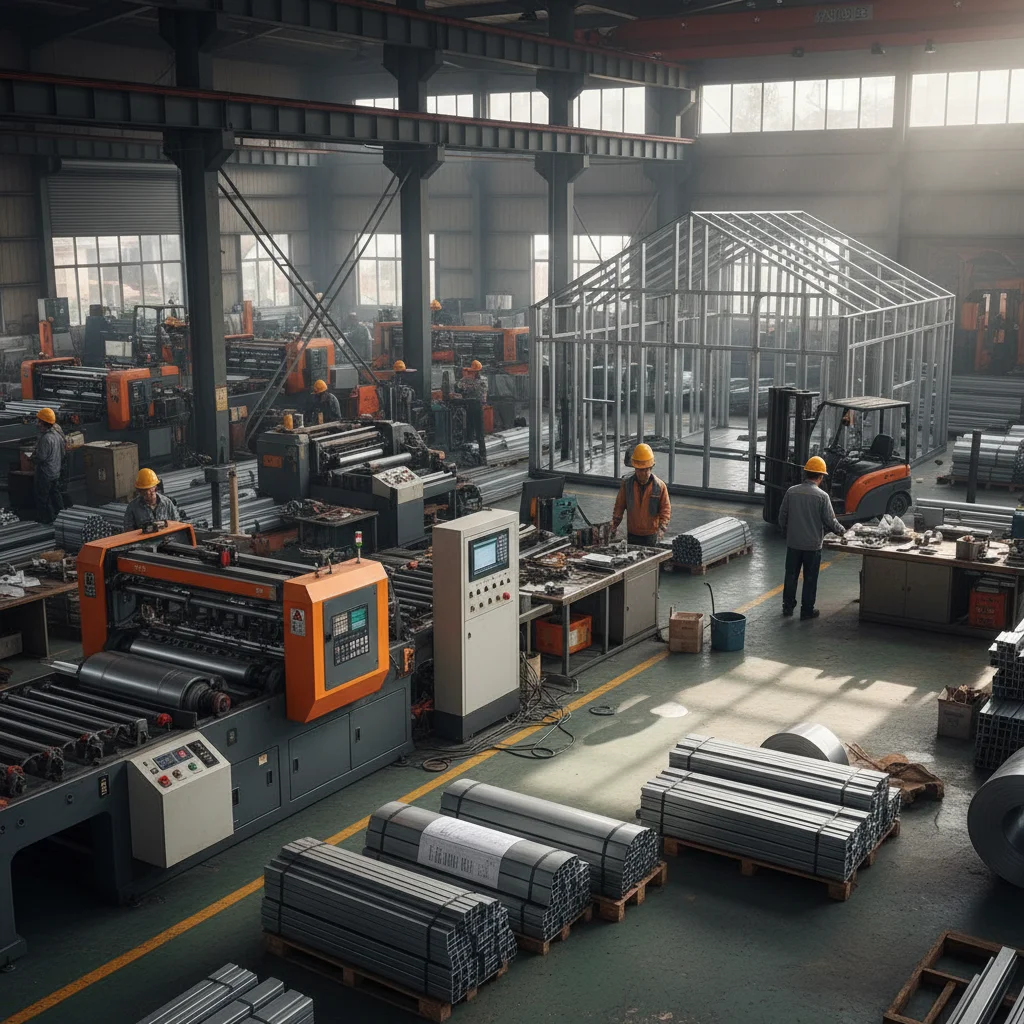
Precision engineering also plays a role. For high-performance systems, such as those produced by Wen'an Jinkai Building Materials Co., Ltd., automated production lines ensure that thickness tolerances are kept within strict limits (e.g., 0.21mm to 0.40mm for specific T-grid components). This consistency reduces material waste during installation, which offsets a higher initial purchase price.
Furthermore, regional building codes dictate the minimum gauge required for specific wall heights and load-bearing capacities. In jurisdictions with strict seismic or wind-load requirements, the demand for 18 gauge studs increases, creating a market dynamic where availability and logistics costs can influence the final quote.
Many contractors face a dilemma: whether to optimize for the lowest immediate 6 18 gauge metal studs price or to invest in higher-specification profiles. The risk of under-specifying is high; a wall that bows or fails under load leads to catastrophic project costs that far outweigh initial material savings.
True cost efficiency in steel framing is measured by the balance of material weight, installation speed, and the reduction of long-term maintenance. A precision-engineered profile reduces the need for additional bracing, thereby lowering overall labor expenses.
To mitigate these risks, a systematic approach to selection is required. By analyzing the load-bearing requirements—such as the weight of suspended ceilings or the presence of heavy machinery—engineers can determine the exact gauge needed, ensuring safety without over-spending on unnecessary material thickness.
When comparing different steel framing options, it is useful to look at a "Value Index." This index considers not just the unit price, but the load capacity and durability relative to the cost. For instance, while 18 gauge studs are more expensive than 20 gauge, their load-bearing capacity increases disproportionately, offering better value for structural applications.
In our internal analysis of framing systems, we evaluate components based on their ability to resist warping and their compatibility with various panels, such as gypsum or PVC laminated boards. Systems that offer high modularity, like the Black Lined T24, demonstrate that integrating aesthetic finishes with structural strength can increase the overall property value.
In a typical industrial setting, 18 gauge studs are deployed in areas where walls must support heavy integrated fixtures or serve as fire-rated barriers. For example, in a luxury retail space or an office complex, these studs provide the necessary rigidity to prevent wall deflection when installing large glass partitions or heavy shelving units.
Beyond simple walls, these structural profiles often work in tandem with advanced ceiling systems. The integration of a robust wall frame with a high-performance grid—such as the Black Lined T24 which supports mineral fiber and gypsum boards—creates a seamless transition from wall to ceiling, ensuring architectural definition and structural stability.
The industry is moving away from generic steel profiles toward specialized, region-specific systems. We are seeing a rise in demand for the Canada-US Drywall System and the Australian Drywall System, which are tailored to meet the specific regulatory and environmental conditions of those markets.
Another significant shift is the demand for "aesthetic structuralism." Modern architects no longer want the framing to be entirely hidden; they are integrating exposed metal elements. This has led to the development of products with baked-on or laminated finishes that prevent fading and scratching, blending the line between structural support and interior design.
Furthermore, the adoption of automated inventory control and supply chain synchronization is reducing the "hidden costs" of framing. By tracking the real-time availability of Main Tees and Cross Tees, companies can reduce on-site storage needs and minimize material waste, effectively lowering the total project cost despite fluctuations in the 6 18 gauge metal studs price.
Selecting the right steel profile requires a multi-dimensional evaluation. It is not simply a matter of choosing the cheapest gauge, but identifying the intersection between structural necessity and budget constraints. A failure to account for the "total cost of ownership"—including installation labor and long-term maintenance—often leads to budget overruns.
For decision-makers, the comparison between traditional wooden frameworks and modern steel systems is stark. Steel offers superior anti-corrosion properties and modular installation speed, which significantly reduces labor expenses and project timelines.
The following framework provides a relative assessment of different framing strategies to help buyers determine the most sustainable investment for their specific project requirements.
| Selection Factor | Light Gauge (25g) | Heavy Gauge (18g) | Hybrid System |
|---|---|---|---|
| Load Capacity | Low (Non-structural) | High (Structural) | Variable |
| Initial Material Cost | Low | Moderate to High | Moderate |
| Installation Speed | Fast | Moderate | Moderate |
| Lifespan/Durability | Standard | Excellent | High |
| Code Compliance | Basic Partitions | Industrial/Commercial | Project Specific |
| Typical Use Case | Residential Dividers | External/Load Walls | Complex Interiors |
The price is primarily influenced by the current market cost of galvanized steel, the volume of material (since 18 gauge is thicker than standard light-gauge studs), and the precision of the manufacturing process. Additional factors include the thickness of the zinc coating for corrosion resistance and the logistics costs associated with shipping heavier structural profiles.
You should opt for 18 gauge studs when the wall is designated as load-bearing, when it must support heavy integrated fixtures, or when local building codes require higher structural rigidity for specific wall heights. They are ideal for industrial settings and commercial office complexes where durability and stability are non-negotiable.
Yes, heavy-gauge studs provide the necessary structural perimeter to support high-performance ceiling systems. For instance, the Black Lined T24 system requires a stable wall angle and framing to ensure the grid remains perfectly aligned without warping, making the combination of structural studs and precision T-grids a professional standard for commercial interiors.
Steel framing offers a higher long-term ROI due to its resistance to rot, warping, and pests. While initial material costs may vary, the installation is modular and faster, significantly reducing labor expenses. Furthermore, steel contributes to higher property value through better fire resistance and a more modern, sleek finish.
Baked-on or laminated finishes provide a hard protective layer that prevents scratching and color fading. In exposed framing designs, this ensures that the structural components remain aesthetically pleasing over time, reducing the need for painting and overall operating expenses (OpEx) for the building owner.
Absolutely. Different markets have different standards, which is why specialized systems like the South American System or the Furring System for the Middle East exist. These variations account for regional building codes, humidity levels, and common architectural preferences to ensure structural safety and compliance.
Navigating the complexities of the 6 18 gauge metal studs price requires a shift in perspective from "lowest cost per piece" to "highest value per project." By prioritizing precision engineering and matching the material gauge to the actual structural load, developers can avoid costly failures and ensure a professional, long-lasting finish.
As the industry moves toward more integrated, high-performance systems, the synergy between structural wall framing and advanced ceiling grids will continue to define the quality of modern commercial architecture. Investing in quality materials today is the most effective way to reduce future maintenance and maximize property value.