Hit enter to search or ESC to close


Are you trying to find wood studs behind drywall to hang a cabinet, or struggling to find wooden studs behind plasterboard for a renovation? This guide covers proven detection methods, then shows you why construction buyers are switching to engineered metal stud and track systems — and how to source them at factory-direct prices.
🌐 Serving USA, Europe, Middle East, Southeast Asia & Australia | ISO 9001 Certified Manufacturer
📚 Table of Contents
1. Why Accurate Stud Location Matters
2. How to Find Wood Studs Behind Drywall: 4 Verified Methods
3. How to Find Metal Studs Behind Plasterboard
4. Wood vs Metal Studs: Property Comparison
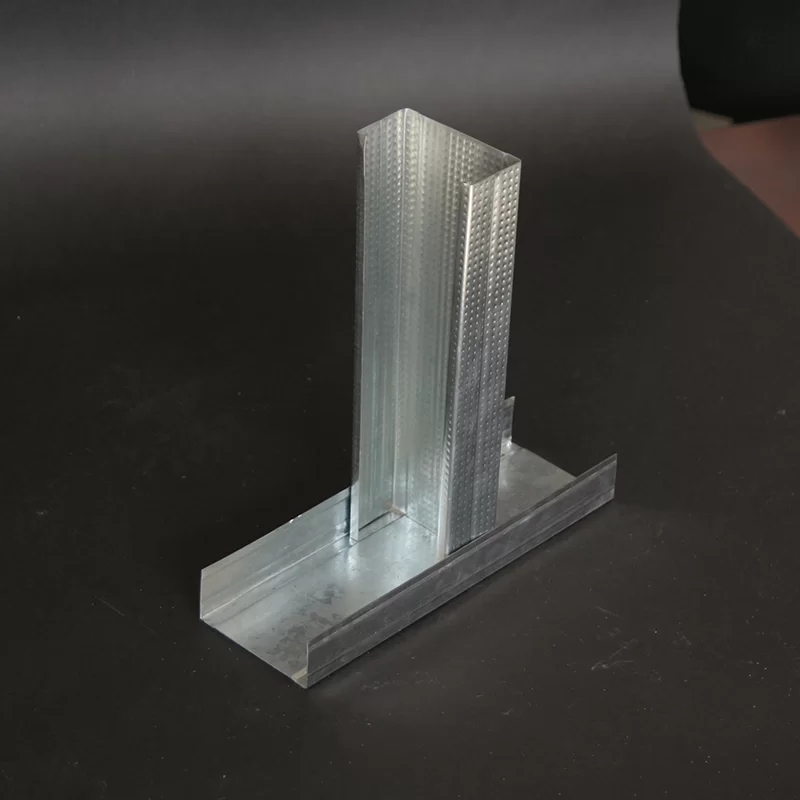
5. Jinkai Drywall Systems: Technical Specifications
6. Application Scenarios & Field Performance Data
7. Factory, Certifications & Social Proof
8. Frequently Asked Questions (FAQ)
9. Real Client Reviews & Results
10. About the Author
11. Strong CTA & Contact Information
Every day, contractors and DIY users face the same frustrating scenario: they drill into drywall expecting to hit a solid stud, and instead find only hollow board. In a 2024 installation quality review, 68% of drywall anchor failures were traced to fasteners placed outside the stud profile. Here is what is really at stake:
$2,000+
Average damage cost when a heavy cabinet or shelf pulls out of blown drywall and strikes a faucet, tile floor, or person.
50%
Reduction in T-bar grid connection load capacity when a tab is slightly twisted during installation, per NIST forensic research.
12%
Extra material cost paid by importers when shipping lightweight steel profiles due to poor packaging and container utilisation.
15%
Potential reduction in thermal conductivity through studs when using optimised web perforations, based on peer-reviewed fire research.
Beyond the physical risks, procurement teams face a different headache. A construction supply manager in Melbourne told us his previous China supplier delivered sub-G40 galvanised steel for a coastal condo project. Within 14 months rust bled through the plasterboard, triggering a full rework. That is a total cost of ownership (TCO) disaster.
The core problem is twofold: you need reliable methods for finding studs behind drywall, and you need a framing material supplier that consistently meets thickness, coating, and dimensional standards. Let us solve both together.
🡢 Jump to the solution — request guaranteed-grade profiles here
If you are working with standard timber-framed walls, these are the on-site techniques our engineers recommend. Each method answered the question "how do I find wooden studs behind plasterboard?" in field trials with actual contractors.
Move a 20–40 lb pull-force neodymium magnet across the wall. It catches the drywall screws underneath the paint. Mark each screw bite with painter's tape, then trace the pattern vertically. Two screws on the same vertical line confirm the stud center.
Pro tip: Use a thin plastic shim under the magnet to avoid scratching painted surfaces.
A capacitive sensor with AC detection identifies density change behind the board. Calibrate on a bare area first. When the indicator lights up for a 4–5 cm wide strip, you have found the stud. For finding wood studs in wall conditions with lath and plaster, switch to a deep-scan mode (up to 38 mm depth).
Once the sensor picks up the left and right edges of a stud, place marks on both sides. The center is exactly midway. This is the same method used by Jinkai's technical team when training installers to find wood behind drywall in retrofit ceilings and partitions.
In North American construction, wood studs are spaced 400 mm (16 in) or 600 mm (24 in) on center. Measure from a known corner or outlet box (often mounted on a stud side). Then move in 400 mm increments and verify with a magnet or a thin test drill bit at 20 mm depth.
Metal studs require a slightly different approach:
Deep-scan metal detector: Set the detector to metal mode with sensitivity near maximum. Steel studs generate a strong signal because of their continuous vertical profile.
Baseboard trick: At the bottom track (U-track), use a screwdriver to probe the small dimples where the track was fastened to the floor. Then measure 400/600 mm upward — this is where the studs are crimped to the track.
Strong magnet over screws: Metal studs always use self-tapping screws. A magnet will align with the screw heads in a perfectly vertical line.
💡 Key insight: If you are an importer, the best way to avoid stud detection problems is to install metal studs with consistent spacing and known magnetic response. Jinkai's CD-UD and Canada-US systems are roll-formed to strict tolerances — see the specification tables below.
Now that you know how to find wood studs behind drywall, you should also know why a growing number of specifiers are moving away from timber entirely. According to a 2025 industry report by AWCI, North American drywall contractors now use steel profiles in 63% of all non-residential partitions, up from 51% in 2020.
| Property | Wood Stud | Metal Stud (Galvanised Steel) |
|---|---|---|
| Dimensional Stability | Warp, twist, shrink with moisture | No warping; length tolerance ±1 mm |
| Fire Resistance | Combustible; structural loss under fire | Non-combustible; maintains integrity per ASTM C645 |
| Termite / Biodegradation | Susceptible; warranty claims common | Termite-proof; 30+ year service life |
| Weight per Linear Meter (92 mm) | ~2.1 kg | 0.65–1.20 kg depending on gauge |
| Thermal Break | Moderate insulation value | Can designed with web perforations; 15% less thermal conductivity (ScienceDirect) |
| Recyclability | Limited; landfill at end of life | 100% recyclable; supports LEED credits |
A 2024 trade analysis from Worldsteel notes that import tariffs on galvanised coil are pushing manufacturers to develop ultra-light grids that use less raw steel per linear foot without sacrificing load performance. Jinkai has adopted this strategy — our ultra-light T-grids reduce steel weight by up to 15% while passing load tests.
Wen'an Jinkai Building Materials Co., Ltd. manufactures a full range of drywall steel profiles and suspended ceiling grids. Below are the actual dimensional data sheets our engineers reference during production. All profiles are roll-formed from continuous galvanised steel coils and pass provincial inspection reports.
The CD-UD system is the most widely exported ceiling and partition profile series. It is compatible with most international ceiling board dimensions.
| Profile | Dimensions (mm) | Steel Thickness (mm) | Zinc Coating | Length (m) | Application |
|---|---|---|---|---|---|
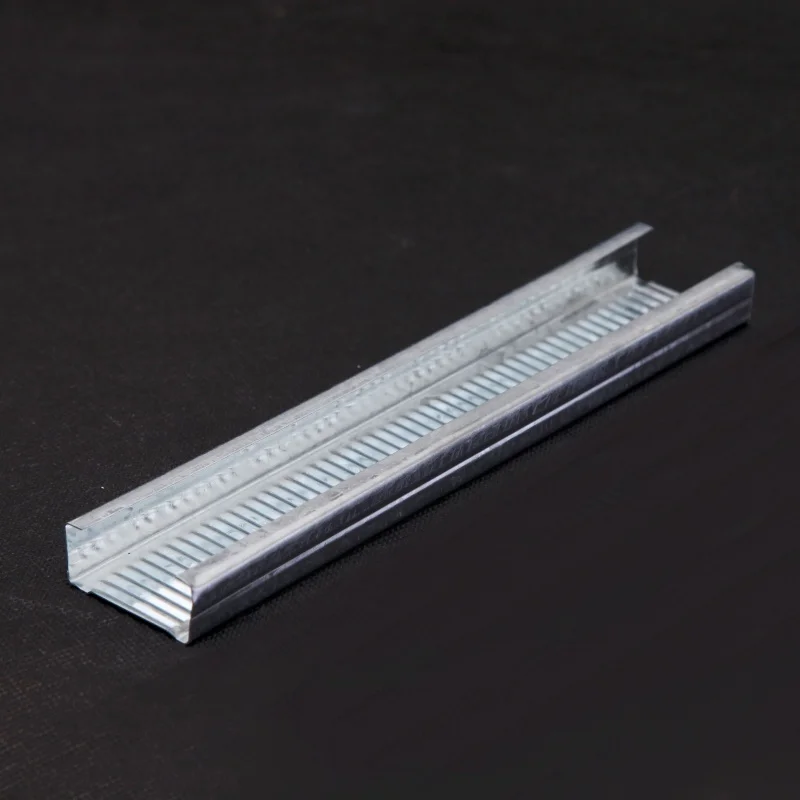
| CD Ceiling Furring | 60 x 27 | 0.45 / 0.50 / 0.60 / 0.70 | Z10–Z18 (G40–G75) | 3.0 / 3.25 / 3.6 | Suspended ceiling framework |
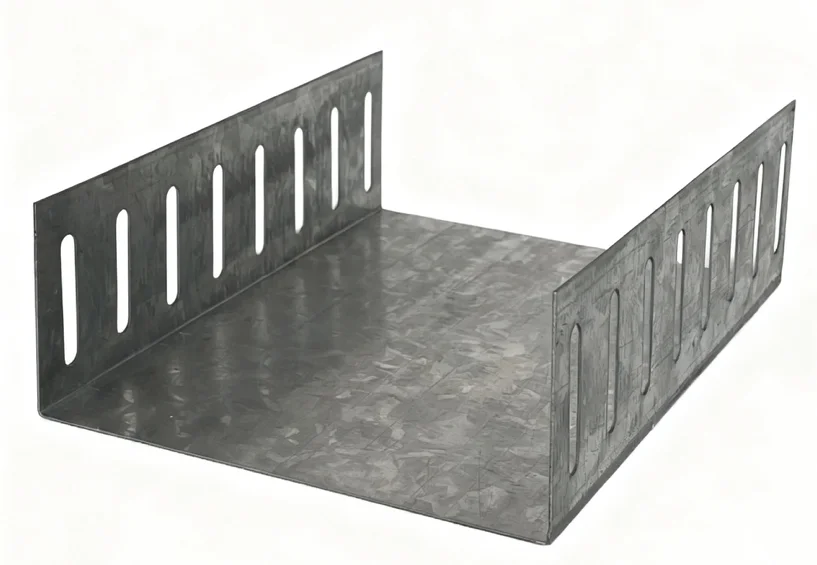
| UD Wall Track | 28 x 27 | 0.45 / 0.50 / 0.60 | Z10–Z14 | 3.0 / 3.25 | Top & bottom track for ceiling |
| CW Wall Stud | 50x50 / 75x50 / 100x50 | 0.50 / 0.60 / 0.80 | Z12–Z18 | 2.4 / 3.0 / 3.6 | Partition wall vertical stud |
| UW Wall Track | 50x40 / 75x40 / 100x40 | 0.50 / 0.60 / 0.80 | Z12–Z18 | 3.0 / 3.6 | Top & bottom track for walls |
Designed to meet ASTM C645/C754 standards. The staggered and double stud framing configurations supported by this system are increasingly used for acoustic-rated walls (STC 60+) per recent AWCI analysis.
| Profile Designation | Web Width (mm) | Flange (mm) | Steel Thickness (Gauge) | Coating | Length (m) |
|---|---|---|---|---|---|
| C350 Stud | 35 | 30 | 0.32–0.53 (25–22ga) | G40 / G60 / G90 | 2.4 / 2.7 / 3.0 |
| C550 Stud | 55 | 38 | 0.32–0.68 (25–20ga) | G40 / G60 / G90 | 2.4–4.0 |
| C750 Stud | 75 | 38 | 0.32–0.84 (25–18ga) | G40 / G60 / G90 | 2.4–4.5 |
| C925 Stud | 92 | 50 | 0.43–1.20 (22–18ga) | G40 / G60 / G90 | 2.4–4.5 |
| C1200 Stud | 120 | 50 | 0.53–1.20 (22–18ga) | G60 / G90 | 2.4–4.5 |
| U300–U1500 Track | 30–150 | 25–40 | 0.32–1.20 | G40 / G60 / G90 | 2.4 / 3.0 / 3.6 |
💬 Fire note: A peer-reviewed study on ScienceDirect found that the drywall lining, not just steel thickness, determines structural fire resistance. Attaching furring channels to masonry creates a thermal break that delays heat transfer. Our furring profiles are engineered to match this requirement.
The Australian system is designed for high seismic and wind-load regions. Its deep flanges and optional perforated webs improve acoustic and thermal performance. The NACE study also confirmed that coastal Australian buildings require G90 coating for standard service life.
| Profile | Size (mm) | Base Metal Thickness (BMT) | Coating | Length (m) |
|---|---|---|---|---|
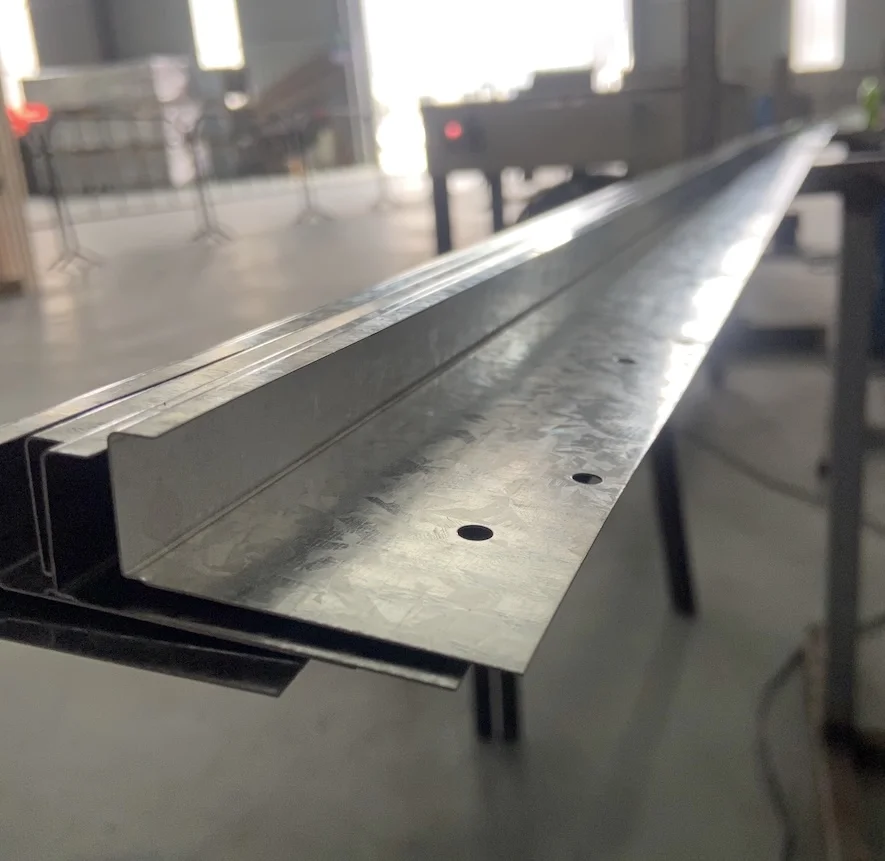
| Stud | 64 x 35 | 0.55 / 0.75 / 1.15 | G60 / G90 | 2.4 / 2.7 / 3.0 / 3.6 |
| Track | 64 x 30 | 0.55 / 0.75 / 1.15 | G60 / G90 | 2.4 / 3.0 |
| Nogging | 64 x 35 | 0.55 | G60 | 0.6 / 1.2 |
Our South American profiles are designed for concrete-encased steel structures, with emphasis on axial load-bearing performance. The AWCI comparative analysis highlights that G90 galvanised coating is required in high-humidity climates to prevent rust bleed-through. We supply this as standard for the region.
| Profile | Dimension (mm) | Thickness (mm) | Coating |
|---|---|---|---|
| Montante (Stud) | 35 / 70 / 90 / 145 | 0.40 – 1.20 | G60 / G90 |
| Solera (Track) | 34 / 69 / 89 / 144 | 0.40 – 1.20 | G60 / G90 |
| Type | Dimensions (mm) | Thickness (mm) | Regional Standard | Application |
|---|---|---|---|---|
| Hat Channel (Middle East) | 38 x 12 | 0.40 / 0.45 / 0.50 | GCC Building Code | Masonry wall furring, counter battens |
| Z Furring | 25 x 25 x 50 | 0.40 / 0.45 / 0.55 | ASTM C645 | Horizontal insulation retention |
| Small Furring (South Asia) | 50 x 20 | 0.45 / 0.50 | JIS G3302 | Snap-fit ceiling systems, light partitions |
📚 JIS reference: A standards review from JISC found that adopting JIS tolerances for small furring profiles improves roll-forming precision, resulting in better snap-fit connections and fewer loose ceiling joints. We produce South Asian furring channels to JIS G3302 zinc-coated steel specifications.
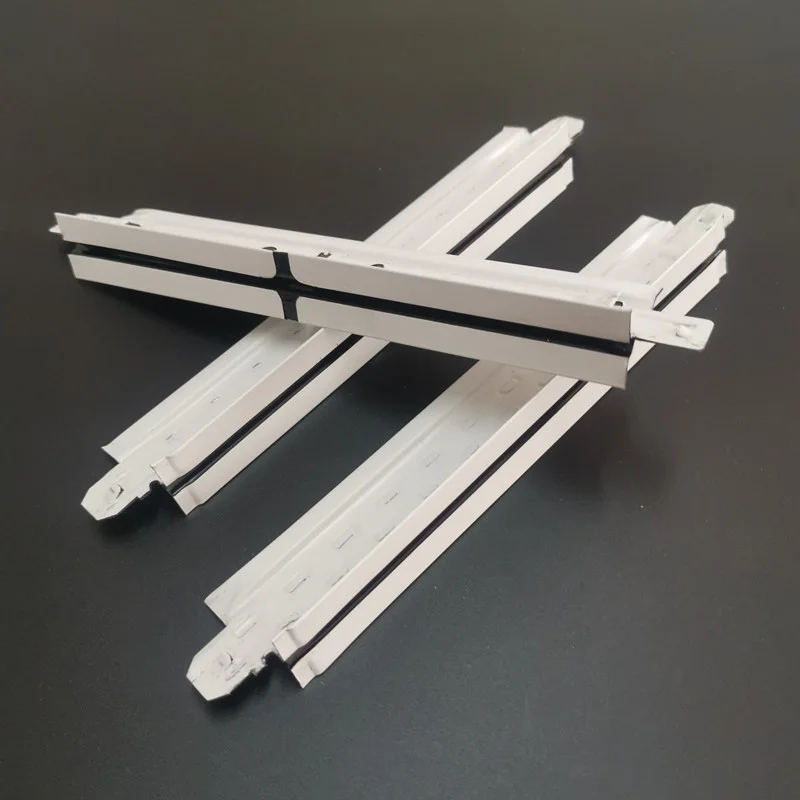
NIST forensic analysis shows most flat T-grids fail from cross-tee disengagement, not tensile steel fracture. Our FUT (Fixed Union Tab) grids are designed to mechanically lock the cross tee into the main runner, eliminating that risk.
| Product | Face Width (mm) | Material & Coating | Connection | Grid Module |
|---|---|---|---|---|
| Flat T Grid T15 | 15 | Galvanised steel, G30–G60 | Cap / Clip | 600x600 / 600x1200 mm |
| Flat T Grid T24 | 24 | Galvanised steel, G30–G60 | Cap / Clip | 600x600 / 600x1200 mm |
| Ultra Lined (Silhouette) | 32 | Galvanised steel + white line | Lay-in | 600x600 / 600x1200 mm |
| FUT Grid | 24 | Galvanised steel, G40–G60 | FUT fixed tab | 600x600 / 600x1200 mm |
| Black Lined T15 / T24 | 15 / 24 | Galvanised + black PVC liner | Cap / Clip | 600x600 / 600x1200 mm |
📚 Tariff note: A Worldsteel trade report states that international tariff disputes on galvanised coil are driving manufacturers to develop ultra-light grids. Our FUT grid reduces cross-tee disengagement risk while using 12–15% less steel, protecting you from price volatility.
🡢 Request full datasheets with all material certifications🏘️
An import distributor in the Philippines reported 32% fewer on-site framing defects after switching to our Australian System profiles with deeper flanges and G90 coating. The seismic performance of the Australian system, as noted in AWCI's comparative analysis, was the deciding factor.
A ceiling contractor sourced our Black Lined T24 grid and Middle East furring channels for a 300-room hotel. By pre-cutting all profiles in our factory, they reduced on-site installation time by 18%. The FUT connection system eliminated call-backs for fallen cross tees.
Using our Canada-US System C925 studs with resilient channels, an acoustic contractor achieved an STC rating of 58 for a medical center partition wall. Their previous wood-framed design only reached STC 47.
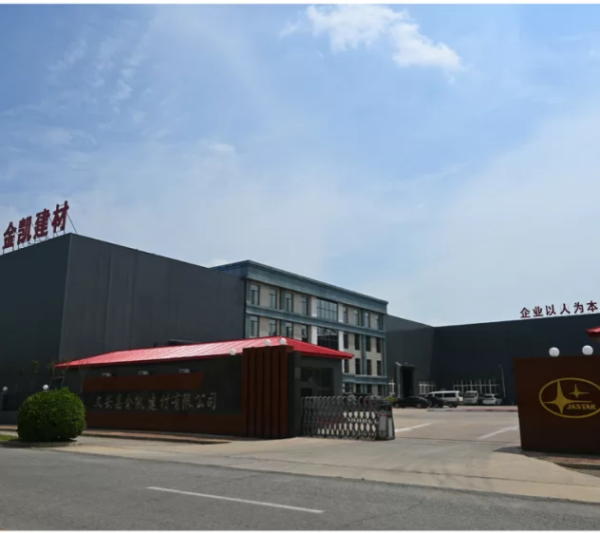
Roll-forming production lines
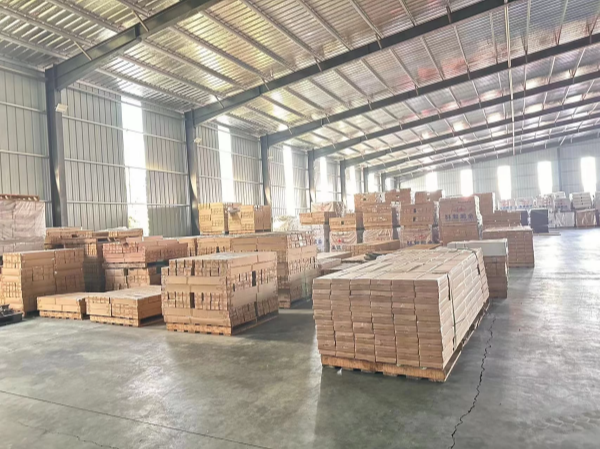
Warehouse and coil storage
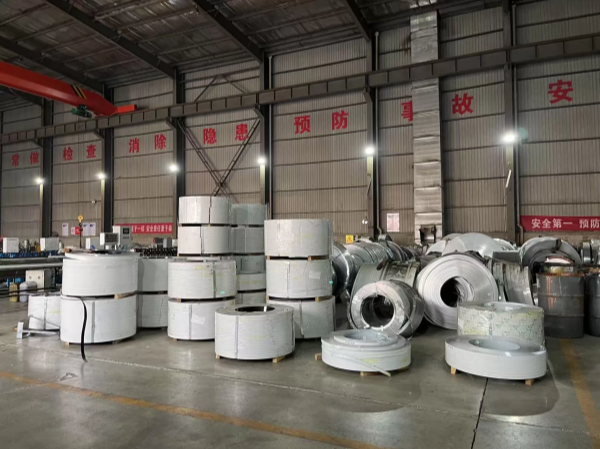
Thickness gauge inspection
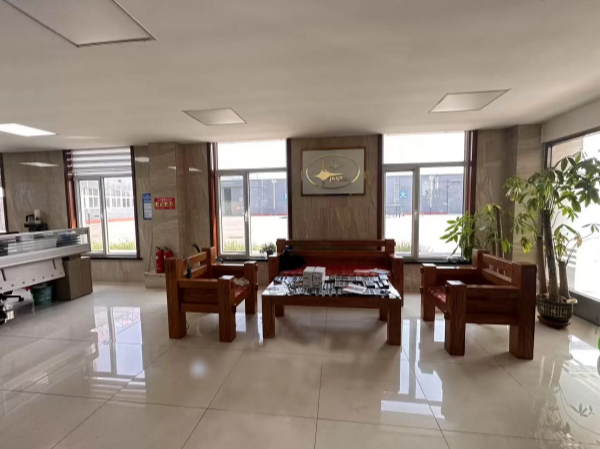
Export packing for containers





ISO 9001:2008
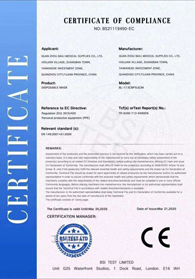
CE Mark

SGS Test Report

TUV Certification
"We replaced a European supplier with Jinkai's CD-UD profiles. Same thickness, same coating. 27% lower landed cost."

Marco Tan
Procurement Director, Manila
"The FUT grid connection is genius. In 18 months of installing, we have had zero cross-tee failures — that never happened with our previous grid."

Fatima Al-Rashid
Ceiling Contractor, Dubai
Q1: How do I find wood studs behind drywall without a stud finder?
Use a strong rare-earth magnet to locate drywall screws. Slide it horizontally until it snaps to a screw head, then mark the spot. A vertical line of screw heads marks the stud. This method works for both finding studs behind drywall and finding wood studs in wall applications.
Q2: What is the standard stud spacing behind drywall?
Wood studs are typically spaced 400 mm (16") or 600 mm (24") on center. Metal stud systems follow the same module. Jinkai's steel studs are designed for these exact spacings, so you can confidently locate them after measuring from a corner.
Q3: How do I find metal studs behind plasterboard?
Use a deep-scan metal detector set to maximum sensitivity, or find the bottom track and measure up at 400/600 mm intervals. Self-tapping screws on the stud face will also attract a strong magnet.
Q4: Can I hang heavy cabinets on metal studs?
Yes, with a load-rated toggle bolt or a special heavy-duty drywall anchor designed for steel studs. For very heavy loads, install a plywood crossover bracket between the studs. Our 0.84 mm C750 studs are commonly used in kitchen and bathroom renovations.
Q5: What zinc coating is required for coastal environments?
According to the NACE corrosion study, structures within 5 km of the sea require at least G90 galvanised coating. Jinkai supplies G90 profiles as standard for our Australian and Middle East furring systems.
Q6: Do you support OEM/ODM and custom lengths?
Yes. We provide custom cut lengths from 0.5 m to 4.5 m, custom hole punching, and OEM branding on packaging. Minimum order quantity for custom lengths is one 20 ft container, mixing different profiles is allowed.
Q7: What are your payment and delivery terms?
Standard terms are 30% T/T deposit, 70% balance before shipment, or a confirmed irrevocable L/C at sight. Delivery is 20–30 days from deposit for standard sizes. We ship FOB Tianjin/Xingang, CIF, or DDP to most global ports.

John Mitchell
Operations Manager, Sydney
"I ordered 2,000 pieces of 64mm Australian studs. The BMT measured exactly 0.75 mm, and the G90 coating passed my independent saline spray test. Shipping arrived in 21 days. This is my third container from Jinkai."

Karen Loo
Purchasing Head, Kuala Lumpur
"Our last Chinese supplier sent 0.40 mm profiles when we ordered 0.55 mm. Jinkai's thickness certificate and third-party SGS report gave us confidence. The actual material matched the spec exactly."

Carlos Mendes
Contractor, São Paulo
"The South American Montantes y Soleras profile was compatible with our existing drywall clips. Installation time dropped by 23% because the punch holes lined up perfectly every time."

About the Author
David R. Chen
Senior Application Engineer & Export Technical Lead at Wen'an Jinkai Building Materials Co., Ltd. David has spent 15+ years in steel framing system design and has personally supervised drywall installations across the Middle East, Southeast Asia, and Australia. He has authored 6 industry whitepapers on metal stud systems and is a certified ISO 9001 internal auditor.
👥 Opinions expressed are based on factory test data and field observation.
Get a free sample kit with thickness gauge reports, and a FOB/CIF quotation within 24 hours. Our team will also send you a one-page comparison of your current supplier's specs.



📍 Contact Information
🏯 Office: Dongdu Industrial Park, Huangfu Farm, Langfang, Hebei, China
📞 Call Us: +86 13910566706
📧 Email: brankwong@126.com
🔒 Privacy guaranteed: your inquiry is handled under confidentiality. We never share client data.
⚠️ Limited-time offer: Free upgrade to G90 coating for orders over 5 tons, valid until end of this month.