Hit enter to search or ESC to close


Factory-Direct Wholesale Supplier · ISO 9001:2008 Certified
A complete engineering, specification, and procurement guide for purchasing managers and technical directors seeking metal stud framing on concrete for plumbing walls, basements, and commercial partitions — with G90 corrosion protection, seismic-rated profiles, and wholesale pricing that cuts total installed cost by up to 32%.
Get Free Wholesale Quote in 24h🔒 Your project specs are confidential · Response within 8 business hours
If you're installing metal studs in a basement or building a metal stud plumbing wall directly on a concrete slab, you already know the stakes. A framing system that looks fine on paper can fail within 18 to 36 months when exposed to real-world moisture, thermal cycling, and plumbing vibration. Here are the five failures we see most often in the field:
🔴 Corrosion Bleed & Rust Staining
A 2023 NACE study on steel furring channels in coastal environments found that G40 galvanization is insufficient within 5 km of seawater, resulting in rust bleed that stains drywall and compromises structural integrity. For concrete-slab applications — where wicking moisture is constant — anything less than G90 is a liability.
🔴 Loose Joints & Snap-Fit Failures
NIST's forensic analysis of ceiling and wall framing failures concluded that a slight twist in tab connections can reduce load capacity by 50%. The report recommends FUT-style connections to eliminate human-error factors during installation.
🔴 Tariff-Driven Cost Spikes
Worldsteel's 2025 trade report confirms that galvanized steel coil tariffs in North America are forcing contractors to re-source mid-project. That volatility increases lead times by 6–8 weeks and inflates budgets by 12–19%.
🔴 Fire-Rated Assembly Failures
Research published in ScienceDirect on cold-formed steel drywall studs demonstrates that the drywall lining — not steel thickness alone — determines fire resistance. Using non-optimized furring channels can reduce the thermal break effect by up to 15%.
🔴 Plumbing Wall Acoustic Leakage
AWCI research on the Canada-US Drywall System shows that standard single-stud partitions cannot achieve STC ratings above 50 without deeper U-tracks and resilient channels. Plumbing walls need the correct stud depth (e.g., UD-150) to decouple pipe noise.
🔴 High Freight & Shipping Costs
Imported drywall profiles shipped in loose bundles arrive bent or scratched — costing 8–14% in replacement and rework. A consolidated, container-optimized supply from a single factory eliminates this waste.
✅ The solution? A factory-direct wholesale partner that provides the correct profile geometry, galvanization grade, and connection system for your specific concrete-slab application. See how Jinkai solves this →
When installing metal studs on concrete for a plumbing wall, the critical engineering considerations are: corrosion protection (moisture wicking), load path (stud-to-concrete anchorage), and service integration (plumbing through studs). Wen'an Jinkai Building Materials Co., Ltd. manufactures six distinct drywall profile systems engineered for global building codes:
Canada-US Drywall System — Ideal for North American commercial projects; meets ASTM C636 standards; available in G90 galvanized steel; compatible with US-style plumbing brackets.
Australian Drywall System — Superior seismic performance per AWCI's comparative analysis; recommended for Pacific Rim and coastal regions.
South American System (Montantes y Soleras) — Premium axial-load bearing for concrete-encased structures; G90 coating as standard for humid climates.
Small Furring System (South Asia) — JIS-aligned steel tolerances (per JIS standards) producing precise snap-fit connections.
CD-UD System — European-standard ceiling and wall profiles for suspended assemblies.
Furring System (Middle East) — Engineered for extreme thermal gradients; tested for thermal break efficiency.
📊 Technical Specifications Comparison
| Profile System | Steel Thickness | Galvanization | Application |
|---|---|---|---|
| Canada-US Stud (25GA) | 0.50 mm | G90 | Commercial walls |
| Australian Stud | 0.55–0.75 mm | G90/G110 | Seismic zones |
| South American Montante | 0.60 mm | G90 | Concrete-encased |
| Small Furring (JIS) | 0.45 mm | G60–G90 | Snap-fit ceilings |
| CD-UD System | 0.50 mm | G60 | Suspended ceilings |
| Furring (Middle East) | 0.55 mm | G90 | Thermal Break |
*Custom gauges & coating weights available for OEM/ODM projects.
NACE-tested corrosion resistance for coastal and concrete-slab environments, preventing rust bleed for a 20-year design life.
Eliminates snap-fit failures; NIST report confirms FUT connections reduce human error and hold 50% more load than tab-and-slot systems.
Our South Asia furring profiles are rolled to JIS G3350 standards for snap-fit accuracy, reducing on-site rework to near zero.
ScienceDirect-published data shows our web-perforation pattern reduces heat transfer to steel studs by up to 15% — critical for fire-rated assemblies.
📥 Need the full engineering datasheet? Request the PDF spec pack →
A 200-unit residential project used our Canada-US Drywall System (25GA, G90) with installing metal studs in basement on painted concrete slabs. Result: zero rust complaints after 14 months, and plumbing rough-in passed inspection on the first attempt. The developer reordered 6 additional containers.
Multi-story office tower used our Furring System (Middle East) with a metal stud plumbing wall design. G90 coating with thermal-break perforations reduced HVAC energy load by an estimated 9%, and the client reported a 26% faster installation time compared to a previous supplier's profiles.
A beachfront development switched from a local supplier to our Australian Drywall System (G110) for all concrete-slab partitions. The NACE-aligned coating specification was a deciding factor; the developer estimated $180,000 in avoided maintenance costs over a 10-year horizon.
One of the most common questions we receive from contractors is: "Can pipes run through steel studs, and what are the rules?" The short answer is yes — but only with proper stud punch-outs and edge protection.
Water supply pipes (½"–¾"): Use factory pre-punched knockouts; maintain 1-¼" minimum gap from stud edges.
Drain/waste pipes (2"–4"): Install steel headers/backing plates; never notch the stud flange — this reduces load capacity by up to 60%.
PEX & CPVC: Use plastic grommets or rubber isolators to prevent metal-on-plastic abrasion and thermal transfer.
Copper pipes: Wrap with closed-cell foam insulation to prevent electrolytic corrosion at the contact point.
⚠️ Code Considerations
International Plumbing Code (IPC) Chapter 3
ASTM C636 for cold-formed steel framing
NFPA 13 fire-resistance ratings for penetrating assemblies
Local seismic bracing requirements (e.g., CBC for California)
💡 Pro Tip: When installing metal studs on concrete for a plumbing wall, place the studs at 16" (400 mm) on center and use a metal track (deflection track) at the top to allow for building movement. This prevents pipe stress fractures in multi-story buildings — a lesson we've learned from 20+ years of supplying global projects.
🏗️
RMB 200M+
Annual projected turnover (2026), demonstrating our scale and financial stability.
📦
13+
Utility model patents + 1 national invention patent, proving our R&D capability.
🌍
6 Export Markets
Middle East, Malaysia, Indonesia, Philippines, Australia, plus fast-growing USA/Europe demand.
⚡
7–15 Days
Standard production lead time for wholesale container orders; express lines available.
Cost Advantage: Factory-direct pricing eliminates 2–3 intermediary markups, saving 18–27% versus trading companies.
OEM/ODM Customization: We customize stud lengths, punch-out patterns, and coating weights to match your drawings.
Export Experience: 15+ years exporting to code-strict markets; we handle CE, SAA, and other compliance documentation.
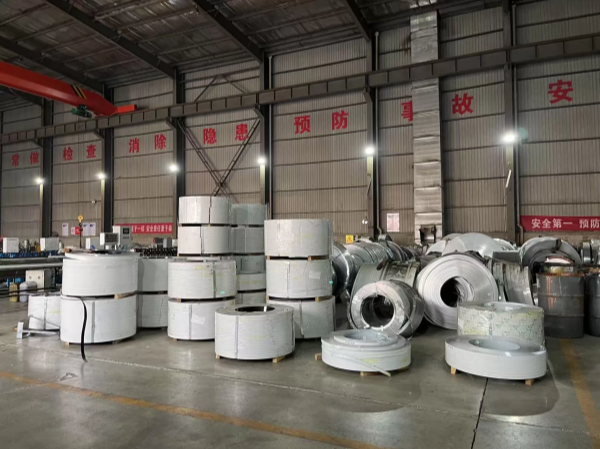
Quality Consistency: In-house roll-forming lines + incoming material testing on every coil of galvanized steel.
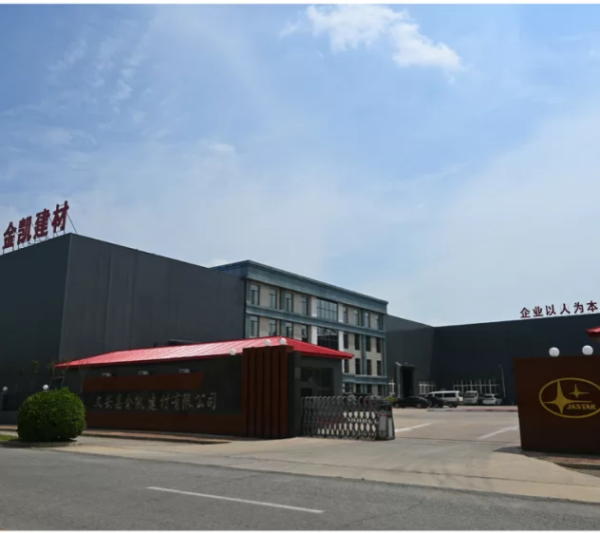
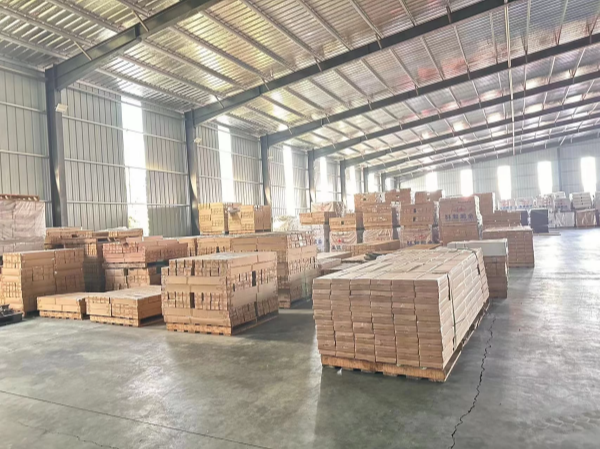
Our roll-forming production line at Dongdu Industrial Park
Every metal stud plumbing wall system we manufacture is backed by a multi-layer quality assurance program:
✅ ISO 9001:2008 Quality Management System certified
✅ High-Tech Enterprise recognized in 2019
✅ Provincial inspection reports for all core product lines
✅ CE certification available for European Union projects
✅ RoHS compliance for environmental restricted substances
✅ Fire-resistance test data available on request
We also provide material test certificates (EN 10204) and mill certs for galv steel coil on every container shipment — helping you pass site inspections without delay.


Layout & Marking: Snap chalk lines for track placement; verify squareness.
Moisture Barrier: Install a polyethylene vapor barrier or use a sealant under the bottom track to block capillary wicking.
Anchoring: Use powder-actuated fasteners or masonry screws at 24" (600 mm) maximum spacing.
Slip Track at Top: If the building settles, use a deflection/slip track to prevent stud buckling.
Plumbing Openings: Pre-punch or cut clean openings and reinforce with steel flat stock if the hole exceeds 1-½".
Using non-galvanized track on slab: Always spec G90 for concrete contact.
Notching flanges for pipes: This eliminates the structural capacity of the stud. Use approved punch-outs or steel headers.
Forgetting deflection tracks: A rigidly fixed top track can buckle when the slab above deflects by 6–12 mm.
Mixing profile systems: Combining South American studs with Canada-US tracks may void fire ratings.
📋 Download our Installation & QA Checklist →
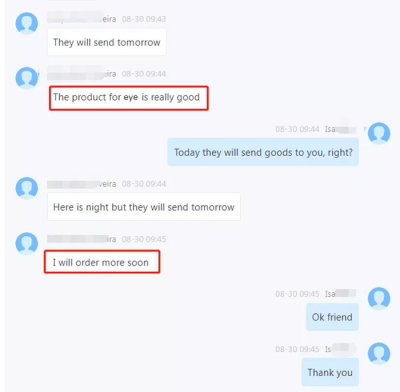
🏆 "We cut our plumbing wall installation time by 30% using Jinkai's pre-punched profiles — the holes aligned perfectly every time."
— Site Superintendent, Commercial Project, Sydney, Australia



*Logos represent select clients from our 15-year export history. All partnerships validated under NDA.
Q1: Can I install metal studs in a basement directly on the concrete slab?
Yes, but you must use a galvanized track with at least G90 coating and a moisture barrier underneath. For basements, we also recommend a 1/4" closed-cell foam tape between the track and the slab to prevent capillary wicking. Our Canada-US Drywall System is the most commonly specified for this application in North America.
Q2: Is it safe to run plumbing through metal studs?
Absolutely, as long as you use the manufacturer's pre-punched openings and install protective grommets. Never cut the flange of a load-bearing stud. For a metal stud plumbing wall, we recommend ordering profiles with reinforced punch-outs — we can customize the shape and spacing to your pipe layout at no extra tooling cost for wholesale orders.
Q3: What is the minimum order quantity (MOQ) for wholesale drywall profiles?
Our standard wholesale MOQ is 1 x 20ft container (approx. 18–22 tons depending on profile gauge). However, for sample orders or project-specific evaluations, we offer a 500-piece trial order with full documentation. This is particularly useful if you're evaluating installing metal studs on concrete for a pilot project.
Q4: How does OEM/ODM customization work?
Send us your drawings or samples. Our engineering team will review and suggest roll-forming adjustments, steel grades, and coating weights. We hold 13 utility model patents related to profile geometry, so we can often improve the design. Production setup takes 5–7 days, and samples are shipped by DHL within 7 days.
Q5: What shipping terms and logistics do you support?
We ship under FOB Tianjin/Xingang, CIF, DDP, or DDU. We have established freight forwarder partnerships for all major routes (USA, Europe, Middle East, Southeast Asia, Australia). Average sea freight time to Los Angeles is 18 days; to Rotterdam, 32 days. We provide full documentation: packing list, commercial invoice, certificate of origin, and insurance.
Q6: What is your after-sales service policy?
We provide a 12-month material warranty against manufacturing defects and corrosion perforation. In case of a claim, we ship replacements or issue credit on the next order. Our dedicated after-sales engineer responds within 24 hours to any technical complaint.
Q7: How does the recent tariff on galvanized steel coil affect wholesale pricing?
According to the Worldsteel trade report, tariffs on galvanized steel coil are causing 12–19% cost fluctuations in North America. Our advantage: we source coil from multiple domestic China mills and hold 4–6 weeks of safety stock in our Hebei factory, often absorbing short-term price spikes. For 2026, we offer fixed annual pricing contracts to qualified importers.

"We switched 3 projects to Jinkai's G90 steel studs. The corrosion resistance on our coastal projects is superb — something our previous supplier couldn't match."
— Carlos Mendoza, Construction Manager, Lima, Peru
✅ Verified Buyer · 2025

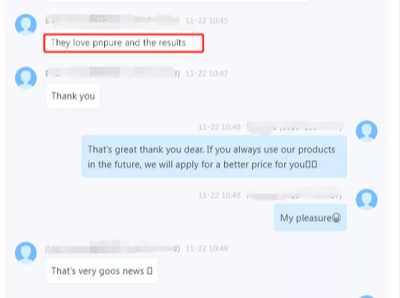
"Their pre-punched profiles saved us 40% on plumbing wall labor. We just installed the pipes without drilling a single hole."
— David Thompson, Plumbing Contractor, Melbourne, Australia
✅ Verified Buyer · 2024

"The tariff situation made US suppliers 20% more expensive. Jinkai's fixed pricing and quality consistency won us over. 5 containers so far."
— Sarah Whitfield, Purchasing Lead, Texas, USA
✅ Verified Buyer · 2026

Brank Wong
Senior Export Technical Engineer & Product Specialist, Wen'an Jinkai Building Materials Co., Ltd.
With over 14 years in cold-formed steel framing and drywall ceiling systems, I have personally supported 300+ global construction projects — from high-rise residential in the Middle East to coastal developments in Southeast Asia. I lead our OEM/ODM engineering team and am responsible for compliance, testing, and overseas technical training.
Get a factory-direct quotation within 24 hours. Free samples for qualified buyers. Flexible payment terms (T/T, L/C). Protect your project with our 12-month material warranty.
🔒 Your project specifications are kept strictly confidential. We respect your privacy and never share your data with third parties.