Hit enter to search or ESC to close
Budgeting for structural framing often centers on a single variable: the raw material cost. However, when analyzing light gauge steel truss prices, the calculation must extend beyond the price per ton to include installation speed, waste reduction, and long-term structural integrity.
The shift from traditional timber to cold-formed steel (CFS) is driven by a need for precision and fire resistance. In modern construction, the volatility of steel markets creates a complex pricing environment where thickness, coating specifications, and regional logistics significantly shift the final quote.
This guide examines the economic drivers of steel trussing and how professionals can evaluate the total value proposition of galvanized steel components within a broader building system.


The pricing of light gauge steel is fundamentally tied to the global hot-rolled coil (HRC) index. Because CFS is produced through a cold-forming process, any fluctuation in raw steel ore or energy costs for smelting translates directly into the final price of trusses.
Beyond raw materials, the zinc coating weight—essential for corrosion resistance—adds a secondary cost layer. High-humidity environments require heavier galvanization, which increases the material cost per linear meter.
Steel thickness is the most critical technical variable. For instance, profiles ranging from 0.30mm to 1.00mm cater to different load-bearing requirements. A shift from 0.50mm to 0.75mm may seem marginal, but it increases the total steel weight and cost significantly across a large-scale project.
The complexity of the truss geometry also dictates the price. Simple parallel chord trusses are cheaper to manufacture than complex pitched or curved designs. Automated production lines, such as those utilizing high-precision rolling mills, can reduce waste, thereby offsetting some of the raw material costs.
Finally, the integration of accessory components—clips, main channels, and furring channels—adds to the total package price. Systems that are prefabricated to exact specifications reduce on-site labor costs, providing a "hidden" saving that balances the higher initial material price.
Value engineering focuses on maintaining structural performance while optimizing costs. In the context of steel framing, this often means optimizing the gauge of the steel for specific zones of the building rather than using a uniform thickness throughout.
The real economic advantage of light gauge steel is found in the reduction of secondary materials. Unlike timber, steel does not warp or shrink, meaning fewer replacement parts and a smoother application of finishing materials like gypsum boards.
When implementing systems such as the Furring ceiling system, the use of non-combustible galvanized steel instead of wooden supports reduces insurance premiums and increases fire safety ratings, contributing to the building's overall lifecycle value.
To evaluate whether a specific steel truss system is cost-effective, buyers should use a relative index that compares raw material cost against installation time. While steel may have a higher upfront cost than some alternatives, the speed of assembly often reduces the total project timeline.
The following index illustrates the relative impact of different factors on the total cost of a framing project, where a higher value indicates a more significant influence on the final price.
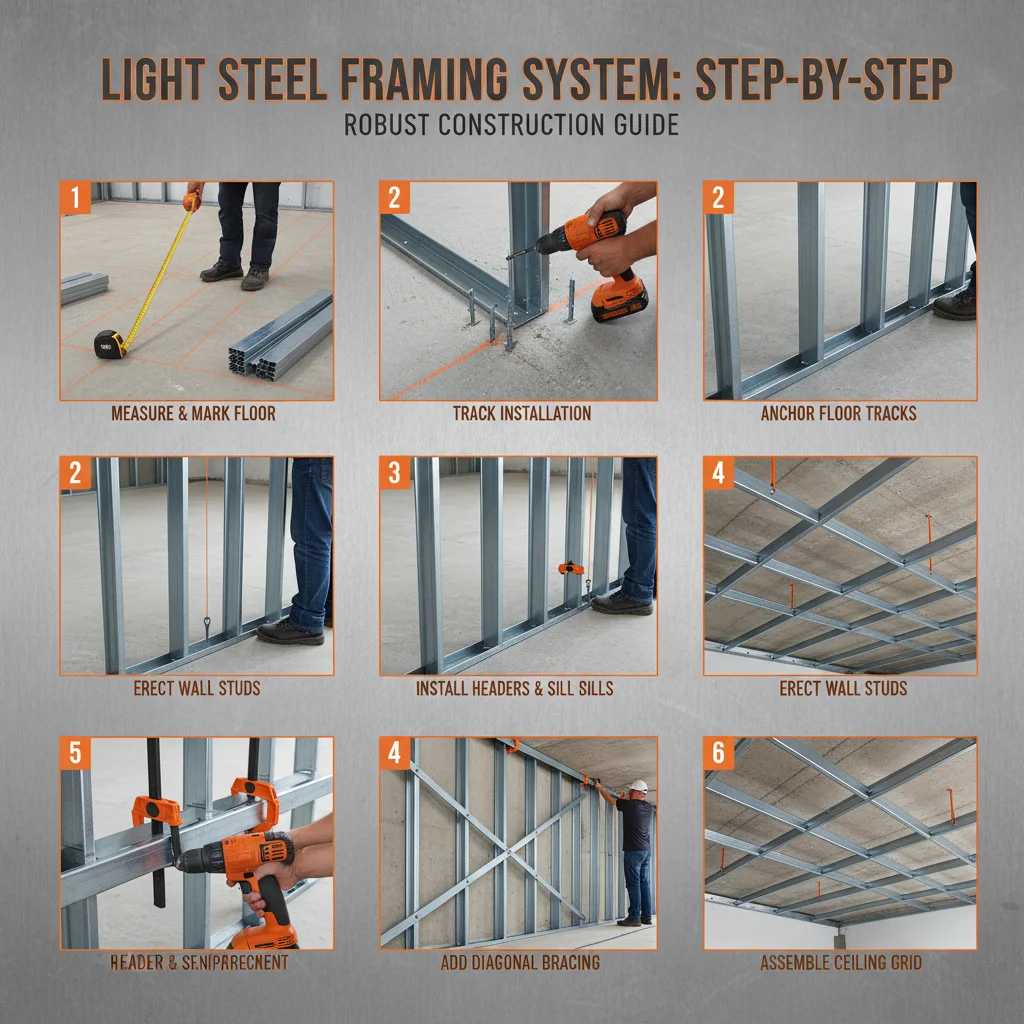
In a typical industrial setting, such as a warehouse or a large commercial office, the use of a suspended steel framing system clad with gypsum boards is common. For these projects, the budget must account for the concealed nature of the grids, meaning the quality of the steel is paramount as it will not be visible but must support the ceiling's dead load for decades.
For residential developers using the Canada-US or Australian Drywall Systems, the focus shifts to standardized profiles. By adhering to standard lengths (e.g., 3.0M), contractors can minimize off-cut waste, which directly lowers the effective cost per square meter of the installed system.
The industry is moving toward "Smart Sourcing," where procurement is timed based on predictive analytics of steel commodity prices. Manufacturers are increasingly adopting fully automated production lines to maintain a 100% qualified rate, reducing the cost of errors and replacements on site.
Sustainability is also altering the pricing landscape. The ability to recycle steel at the end of a building's life adds a residual value that timber cannot match. This circular economy approach is beginning to influence how institutional investors calculate the long-term cost of ownership.
Furthermore, the development of specialized profiles—such as Ultra Lined (Silhouette) systems—allows for thinner materials to achieve the same structural rigidity, potentially lowering the overall tonnage of steel required for a project.
Selecting the right supplier for light gauge steel requires a balance between certification, production capacity, and technical support. A supplier that offers a full range of components—from T-Grids to Drywall Steel Profiles—can often provide better bundled pricing than sourcing from multiple vendors.
Decision-makers should evaluate the "Qualified Rate" of the factory. A high qualification rate ensures that dimensions like 35x22x68mm are consistent, which prevents installation delays that can cost far more than a slight difference in the unit price of the steel.
The following table provides a comparative framework for choosing between different steel framing specifications based on project requirements.
| Project Type | Recommended Gauge | Priority Factor | Typical System |
|---|---|---|---|
| Commercial Office | 0.50mm - 0.70mm | Fire Rating | Furring System |
| Industrial Shed | 0.80mm - 1.00mm | Load Capacity | Heavy Duty Truss |
| Residential Drywall | 0.30mm - 0.50mm | Installation Speed | CD-UD System |
| High-Humidity Area | 0.60mm+ (High Zinc) | Corrosion Resistance | Galvanized T-Grid |
| Budget Housing | 0.30mm - 0.40mm | Material Cost | Small Furring System |
| Premium Fit-out | 0.50mm - 0.80mm | Surface Smoothness | Ultra Lined System |
The most significant driver is the global price of raw steel coils (HRC) and zinc. Because light gauge steel is produced from these materials, any change in mining output or energy costs for steel mills affects the unit price. Additionally, regional transport costs and tariffs on imported galvanized steel can cause price variances between different geographic markets.
Steel thickness (gauge) directly affects the weight of the material. A thicker profile increases the cost per linear meter. However, using the correct gauge prevents structural failure and reduces the need for additional supports. Value engineering involves selecting the minimum required thickness for each specific area to balance safety with cost efficiency.
On a pure material-to-material basis, steel often has a higher upfront cost. However, when calculating the total cost of installation, steel is frequently more economical. It allows for faster assembly, produces significantly less waste, and eliminates the need for expensive chemical treatments for pests or fireproofing required by timber.
The Furring ceiling system provides a suspended, concealed steel frame that creates a perfectly smooth surface for gypsum boards. Its primary advantage is fire resistance and durability compared to combustible wood. It also allows for easy integration of electrical and HVAC systems above the ceiling line without compromising structural integrity.
Verify the supplier's production capabilities and quality control records. Look for companies that use automated production lines to ensure dimensional consistency (e.g., size and thickness). Requesting certificates of compliance with international standards (like GB/T or ASTM) ensures that the steel's strength and coating thickness meet the project's engineering requirements.
Standard lengths, such as 3.0M, are typically the most cost-effective because they optimize the manufacturer's production run. Requesting custom lengths can increase the price due to additional setup time on the cutting machines and potentially higher waste ratios. However, precise lengths can reduce on-site cutting labor and material scrap.
Evaluating light gauge steel truss prices requires a shift in perspective from "price per unit" to "cost per completed square meter." The integration of precision-engineered components, from T-Grids to specialized furring systems, allows for a reduction in labor and waste that far outweighs the initial material expenditure.
By focusing on technical specifications such as gauge thickness and zinc coating, and by partnering with manufacturers who utilize automated, high-precision production, developers can ensure a structural solution that is both economically viable and fundamentally secure.