Hit enter to search or ESC to close
Look, I’ve been running around construction sites for fifteen years, and let me tell you, things are changing fast. It used to be all concrete and brick, a real brute force approach. Now? Everyone’s talking about prefabricated structures, modular builds, light steel frames… honestly, it’s a bit overwhelming. But it’s happening, and it’s happening quickly. Demand is crazy, especially with these new housing projects popping up everywhere. The whole supply chain is stretched thin.
Have you noticed how everyone wants “green” materials now? It’s great, really, but sometimes it feels like a marketing buzzword. I saw a supplier trying to pass off recycled plastic as ‘eco-friendly’ last month… the smell alone was enough to send me running. Anyway, the point is, everyone's looking for efficiency, speed, and something that doesn’t cost a fortune. That’s where light steel framing comes in.
It's not a silver bullet, though. Don’t let anyone tell you it is. There’s a lot of nuance, a lot of potential pitfalls. Especially when it comes to the design. You get these architects who’ve never set foot on a building site, designing these incredibly complex structures. Then we, the guys on the ground, have to figure out how to actually build the thing. It’s… frustrating.
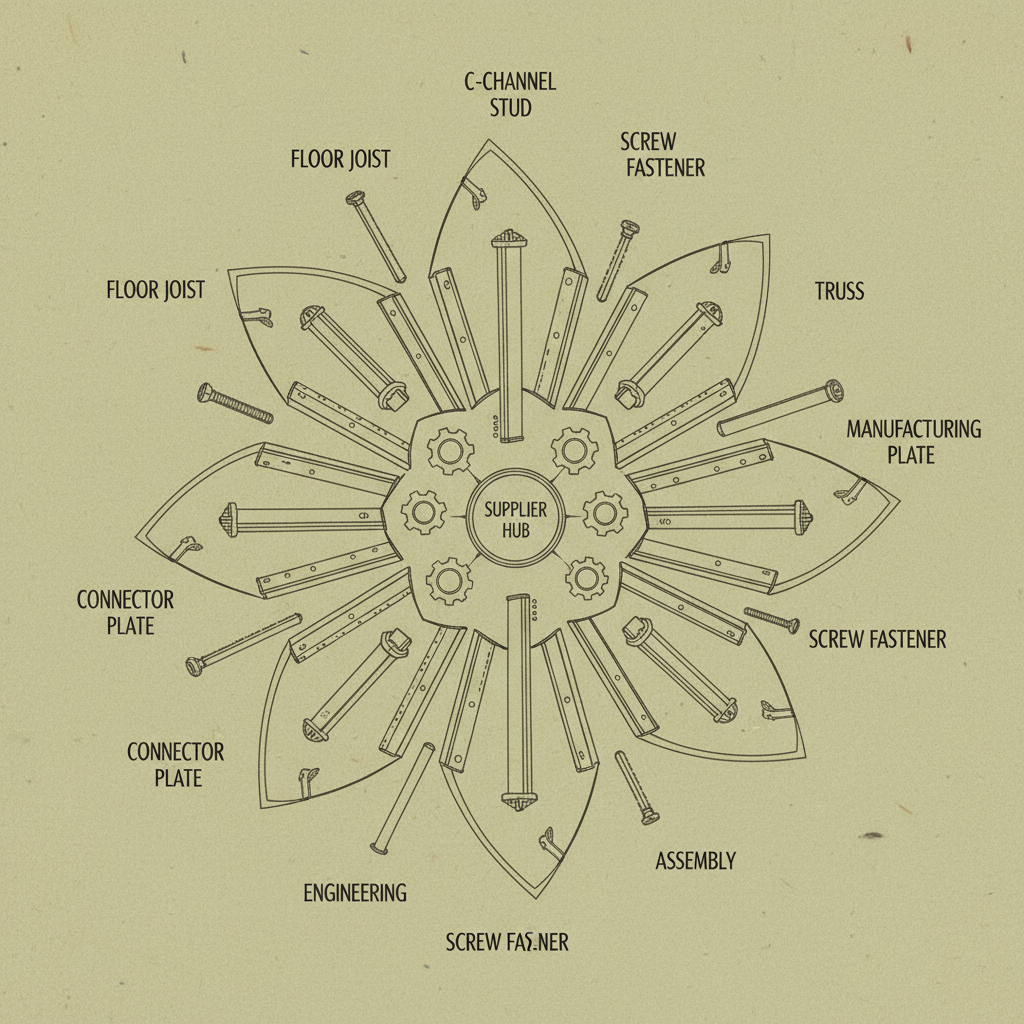
To be honest, speed is the biggest driver right now. Everyone wants things built faster, cheaper, and with less manpower. Light steel framing ticks a lot of those boxes. But…and this is a big but… it's easy to over-engineer things. I’ve seen designs with so many complicated connections and angles that it takes twice as long to assemble. Strangel,y some architects still haven't grasped the concept of modularity. They try to force traditional designs onto a new system, and it just doesn't work. It adds cost and delays, and everyone suffers.
Another common mistake? Ignoring the local climate. You can't just use the same framing system in Miami as you would in Chicago. Corrosion resistance is key, especially near the coast. And you need to factor in wind loads and seismic activity. These things aren’t just numbers on a drawing; they directly impact the stability of the structure.
The steel itself... it’s not all created equal, you know? There's different gauges, different coatings, different levels of galvanization. I prefer the stuff that's a little heavier, honestly. It feels more solid, more robust. You can tell the difference when you're handling it. The lighter stuff feels… flimsy. And the smell! Good steel has a distinct metallic scent, kind of clean. But if you smell something off, a chemical odor, that's a red flag. It probably has a subpar coating.
Galvanization is crucial. It’s what protects the steel from rust. And believe me, rust is the enemy. I once saw a whole shipment of steel frames ruined because the galvanization was too thin. It was a disaster. Took months to sort out.
Then there’s the screws and connectors. Those are just as important as the steel itself. Cheap screws will shear off under pressure. I always recommend using self-drilling screws with a good quality coating. It’s worth the extra money.
Lab tests are fine, but they don't tell the whole story. You need to see how these frames perform under actual construction conditions. I’ve been involved in several on-site tests where we’ve subjected the frames to simulated wind loads and seismic forces. We use things like come-alongs and winches to apply the stress. It's a bit crude, but it gives you a good sense of how the structure will hold up.
I once saw a frame buckle during a wind load test. Turns out the connectors were faulty. It was a wake-up call. It showed us the importance of rigorous quality control.
We also do a lot of fire resistance testing. Light steel is, well, steel. It conducts heat quickly. So you need to make sure the frames are properly protected with fire-resistant materials. It's a non-negotiable.
This is where things get interesting. Architects might design these beautiful, intricate structures, but the guys building it? They're looking for simplicity. They want something that’s easy to assemble, easy to modify, and easy to work with. They're not going to spend hours trying to decipher a complicated drawing. They’ll just… figure it out. And sometimes, that means improvising.
I’ve seen crews cut and weld steel frames on-site to accommodate unexpected changes. It's not ideal, but it happens. That’s why it's important to design with a little bit of flexibility built in. A little wiggle room goes a long way.
The advantages are pretty clear: speed, lightweight, strength, and cost-effectiveness. But it's not perfect. You need skilled labor to assemble it properly. You need to be careful about corrosion. And it can be tricky to run electrical and plumbing through the frames. Anyway, I think the biggest advantage is the design flexibility.
You can customize these frames to a surprising degree. Last year, we worked on a project where the client wanted curved walls. It was a challenge, but we were able to bend the steel to achieve the desired shape. It required some specialized equipment, but it was doable. You just need to find a light steel frame suppliers who's willing to work with you.
Last month, this small boss in Shenzhen who makes smart home devices – stubborn guy, always thinks he knows best – insisted on changing the interface to for the access panel. Now, is fine, but it meant we had to redesign the entire frame. It added weeks to the project and cost him a fortune. He wouldn't listen to anyone. Thought he was being innovative.
He ended up regretting it. The frames were delayed, his production schedule was thrown off, and his client was furious. I felt bad for him, honestly. But sometimes people need to learn the hard way. He also tried to save money on the coating, and now, well, let’s just say he’s spending more money fixing the rust than he saved in the first place.
It's a classic example of trying to be too clever for your own good. Stick to what works, and don't mess with things you don't understand. That’s my advice.
So, you've got different types of steel, coatings, and connection methods. It’s easy to get lost in the details. But here’s a quick rundown of the key differences, as I see them after years of wrestling with this stuff.
This isn't some fancy engineering report, mind you. It’s just a rough guide, based on my own experience.
Remember, it's all about finding the right balance between cost, performance, and durability. There's no one-size-fits-all solution.
| Material Type | Corrosion Resistance | Cost (1-10) | Ease of Fabrication |
|---|---|---|---|
| Galvanized Steel | High | 6 | Good |
| Galvalume Steel | Very High | 7 | Good |
| Pre-Painted Steel | Medium | 5 | Very Good |
| Stainless Steel | Excellent | 9 | Difficult |
| Carbon Steel (with coating) | Variable (depends on coating) | 4 | Excellent |
| High-Strength Low Alloy (HSLA) Steel | Good (requires coating) | 8 | Good |
Honestly? Underestimating the importance of proper detailing. It’s not just about the steel itself, it’s about how it’s connected. If the connections are poorly designed or executed, the whole structure can be compromised. And you won't see that in the lab, only on the job site when things start to move around.
Steel itself doesn’t burn, which is a good start. But it does lose strength at high temperatures. That's why you need to protect it with fire-resistant materials – gypsum board, concrete, whatever. Wood chars and provides some insulation, steel just conducts heat. So, it depends on the system. A properly protected steel frame is generally more fire-resistant than an unprotected wood frame.
Galvanization is your friend. And good design. Avoid trapping water against the steel. Proper ventilation is key. Also, regularly inspect the frames for signs of rust. Early detection can save you a lot of headaches down the road. I saw a job last year where they used a cheap coating, and everything was rusted through within six months. A complete write-off.
Absolutely. But it requires careful engineering and design. You need to consider wind loads, seismic activity, and the overall structural integrity of the building. It’s not just about stacking frames on top of each other. You need a solid foundation and proper bracing. I’ve worked on projects up to eight stories, no problem.
There's definitely a learning curve. It’s different than working with wood. The crews need to be trained on the proper techniques for cutting, fastening, and assembling the frames. I've found that the younger guys pick it up quicker, they're used to working with different materials and technologies. The older guys... well, it takes a bit more convincing.
That's a tricky one. The steel itself can be more expensive than wood, but you often save on labor costs because it goes up faster. Also, you might need less framing material overall, depending on the design. It really depends on the specific project, the location, and the market conditions. But generally, it's competitive, and in some cases, even cheaper.
Ultimately, light steel framing isn't a magic bullet. It's a tool. A powerful tool, but still just a tool. It's faster, stronger, and often more cost-effective than traditional building methods. But it requires careful planning, skilled labor, and a healthy dose of common sense. It’s a solid choice when done right.
And remember, no matter how sophisticated the design, no matter how advanced the technology, whether this thing works or not, the worker will know the moment he tightens the screw. That’s the bottom line. Check out light steel frame suppliers if you want a good starting point.

If you are interested in our products, you can choose to leave your information here, and we will be in touch with you shortly.