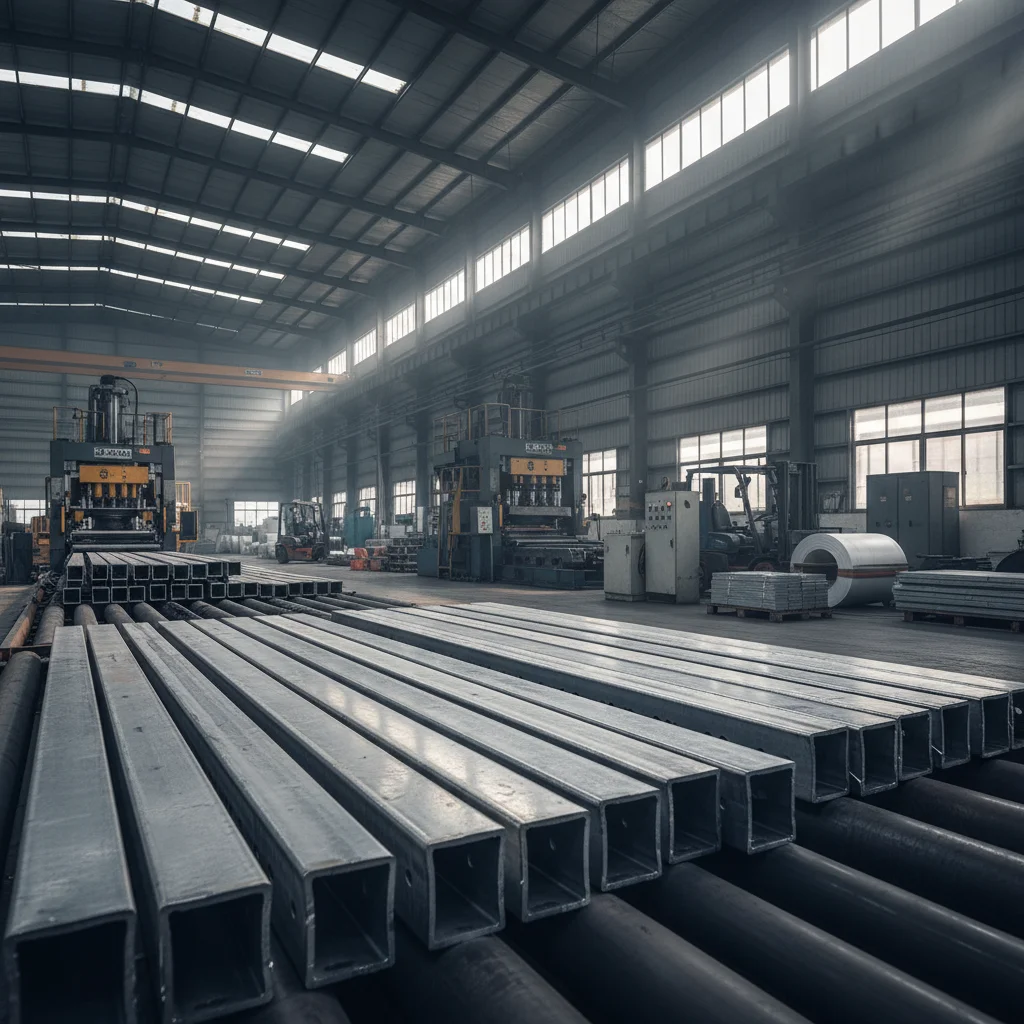
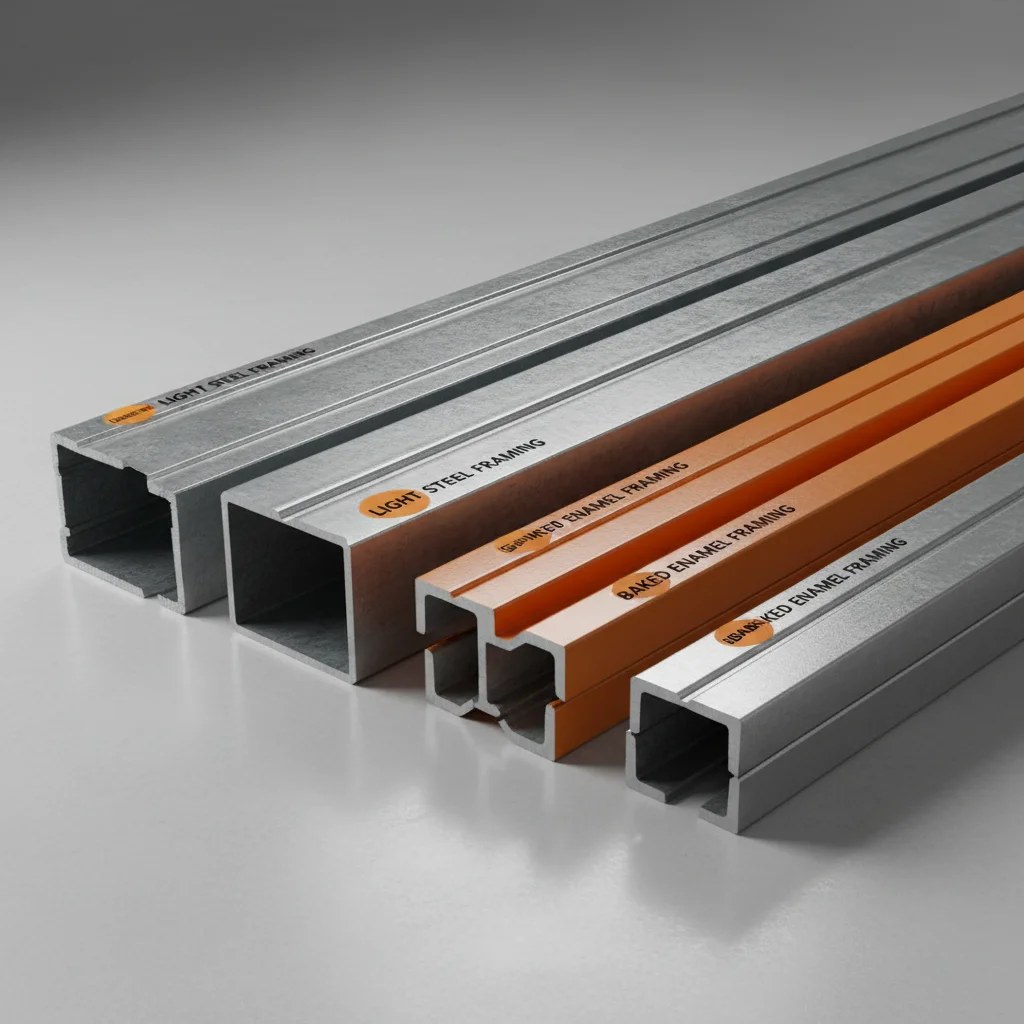
In the fast-evolving landscape of modern construction, the demand for high-efficiency framing solutions has led to a significant surge in metal studs wholesale. Moving away from traditional timber, these galvanized steel components provide a level of precision and structural integrity that is essential for large-scale commercial and residential developments globally.
The shift toward metal studs wholesale is not merely a matter of preference but a response to the need for fire resistance, termite proofing, and dimensional stability. As urban density increases, the construction industry requires materials that can be deployed rapidly without sacrificing the safety or longevity of the building envelope.
Understanding the nuances of sourcing these materials in bulk allows developers and contractors to optimize their supply chains, reducing lead times and operational costs. By leveraging the scalability of professional wholesale systems, the industry can maintain a steady flow of standardized components, ensuring that projects from the Australian Drywall System to the Canada-US Drywall System are executed with mathematical precision.

Global Market Dynamics of Metal Studs Wholesale
The global trajectory of metal studs wholesale is closely tied to the rapid urbanization rates seen in emerging economies. According to data trends aligned with ISO standards, the transition to cold-formed steel (CFS) has accelerated as cities seek to minimize construction waste and maximize floor area. The ability to source materials in bulk allows for the implementation of standardized systems, such as the South American System or the Canada-US Drywall System, across vast geographical areas.
One of the primary challenges addressed by wholesale distribution is the volatility of raw steel prices. By establishing long-term wholesale partnerships, construction firms can hedge against price spikes, ensuring that large-scale infrastructure projects remain financially viable. This stability is crucial for maintaining the momentum of urban development and ensuring that safety-critical components are not compromised by budget cuts.
Defining the Standards of Wholesale Steel Framing
At its core, metal studs wholesale refers to the bulk procurement and distribution of cold-rolled steel profiles used as the internal skeleton for walls and ceilings. Unlike retail purchasing, wholesale operations focus on high-volume consistency, ensuring that every C-stud and U-track meets rigorous tolerances for thickness, zinc coating, and structural load-bearing capacity.
This industry is inextricably linked to the humanitarian need for safe, rapid-deployment housing. In regions recovering from natural disasters, the capacity to import wholesale steel framing enables the swift erection of durable shelters that far surpass the lifespan and safety of temporary tents. The standardization inherent in wholesale allows different crews to work on different sections of a project with the certainty that all components will fit perfectly.
Modern industry definitions now categorize these products not just as "studs," but as part of an integrated system. Whether it is the Australian Drywall System or a specialized Ceiling T Bar setup, the wholesale model ensures that all complementary parts—from the main profiles to the small furring system (South Asia)—are delivered as a synchronized kit, reducing on-site errors and waste.
Core Technical Components for Structural Integrity
The efficacy of metal studs wholesale relies heavily on the quality of the galvanization process. A high-quality zinc coating prevents oxidation and corrosion, which is particularly critical for installations in humid coastal environments or industrial zones where chemical exposure is common.
Scalability in wholesale is achieved through the use of standardized gauges. By adhering to strict thickness specifications, metal studs wholesale providers ensure that the load-bearing capacity is predictable, allowing architects to design taller, leaner walls without risking structural failure.
Furthermore, the precision of the roll-forming process determines the ease of installation. When wholesale components are manufactured with laser-accurate dimensions, the "fit and finish" of the final drywall installation is vastly improved, reducing the amount of joint compound needed and speeding up the painting phase of construction.
Economic Impact and Cost Efficiency Analysis
From a financial perspective, opting for metal studs wholesale provides a significant reduction in per-unit costs compared to piece-meal procurement. The economy of scale allows manufacturers to optimize production runs, passing those savings on to the contractor. This is especially evident when integrating complex systems like the Ultra Lined (Silhouette) or Black Lined T24 grids, where bulk orders reduce logistics and shipping overheads.
Beyond the purchase price, the long-term value is found in the reduction of labor costs. Because wholesale steel profiles are uniform and lightweight, they require fewer man-hours to transport and install than traditional heavy timber or masonry. This operational efficiency creates a ripple effect, allowing projects to be completed weeks ahead of schedule.
Performance Metrics for Metal Studs Wholesale Systems
Global Applications Across Diverse Regional Systems
The application of metal studs wholesale varies significantly by region to meet local building codes. For instance, the Australian Drywall System emphasizes specific seismic ratings and wind-load resistance, requiring a different profile gauge than the systems used in the Canada-US market. By offering region-specific wholesale packages, manufacturers ensure that global developers can maintain consistency while staying compliant with local laws.
In remote industrial zones, such as mining camps or offshore platforms, the logistics of metal studs wholesale become a critical success factor. The ability to ship pre-cut, bundled steel profiles allows for rapid assembly in environments where skilled labor is scarce and weather windows for construction are narrow. This versatility makes steel framing the preferred choice for international infrastructure projects.
Sustainable Value and Long-Term Reliability
Sustainability is no longer an afterthought but a primary driver in the metal studs wholesale market. Steel is one of the most recycled materials on the planet; nearly all wholesale steel studs are produced from a percentage of recycled scrap, and they are 100% recyclable at the end of the building's life cycle. This circular economy reduces the environmental footprint of the construction industry.
Beyond ecology, there is the emotional value of safety and trust. For a building owner, knowing that the interior walls are constructed from non-combustible, wholesale-certified steel provides peace of mind that timber cannot offer. The resistance to mold and pests ensures that the indoor air quality remains healthy for occupants over decades, adding tangible long-term value to the real estate asset.
Reliability is further enhanced by the precision of bulk manufacturing. When a contractor uses metal studs wholesale, they eliminate the risk of warping, shrinking, or twisting—common failures in organic materials. This dimensional stability ensures that doors and windows remain square, and finishes remain crack-free, reducing maintenance costs over the building's lifespan.
Future Trends in Automated Steel Profiling
The future of metal studs wholesale is being shaped by digital transformation and Industry 4.0. We are seeing a move toward "just-in-time" wholesale delivery, where BIM (Building Information Modeling) data is sent directly from the architect's software to the manufacturer's roll-forming machines. This eliminates waste and ensures that every piece of steel is optimized for its specific location in the building.
Automation is also improving the quality of coatings. New plasma-enhanced chemical vapor deposition (PECVD) techniques are being integrated into wholesale production lines to create thinner yet more durable anti-corrosive layers. This allows for a reduction in raw material usage while increasing the lifespan of the profiles, aligning the industry with global "green building" certifications like LEED and BREEAM.
As we look ahead, the integration of smart sensors within wholesale steel profiles could allow buildings to "self-monitor" for structural stress or moisture intrusion. By embedding technology into the very bones of the construction, the metal studs wholesale industry is evolving from a supplier of raw materials into a provider of intelligent structural systems.
Technical Comparison of Global Wholesale Drywall Systems
| Regional System | Primary Application | Durability Score (1-10) | Installation Speed |
|---|
| Australian System | Commercial High-Rise | 9 | High |
| Canada-US System | Residential/Office | 8 | Very High |
| South American System | Mixed Use Urban | 7 | Medium |
| South Asia Small Furring | Lightweight Partitions | 6 | Extreme |
| Middle East Furring | Luxury Hospitality | 9 | High |
| Ultra Lined Silhouette | Specialized Ceiling | 10 | Medium |
FAQS
Buying metal studs wholesale offers significant cost reductions through economies of scale and ensures consistent quality across thousands of units. It eliminates the risk of batch variance, which is common in retail, and allows for the procurement of specialized systems (like the CD-UD System) that are often unavailable in small quantities locally.
Gauge selection depends on the wall height and the intended load. For non-load bearing interior partitions, thinner gauges are sufficient. However, for structural walls or high-traffic commercial areas, a heavier gauge from a metal studs wholesale provider is required. We recommend consulting a structural engineer to match the gauge with local building codes.
Yes, but compatibility depends on the system. Wholesale providers offer regional variations such as the Australian Drywall System or the Canada-US system to ensure the flange widths and screw patterns align perfectly with the local gypsum board dimensions. Always specify your region when ordering in bulk.
Many professional metal studs wholesale manufacturers offer custom cutting services. By providing a detailed cutting list based on your architectural plans, you can receive profiles pre-cut to exact lengths, which significantly reduces scrap metal waste and accelerates the installation timeline.
Resistance is guaranteed through the galvanization process, usually measured by the G-rating (e.g., G60 or G90). Wholesale providers adhere to ASTM or ISO standards, ensuring a uniform zinc coating that protects the steel from moisture. Requesting a material mill certificate with your wholesale order provides documented proof of these standards.
Lead times vary by volume and customization. Standard profiles typically ship within 2-4 weeks, while custom-engineered systems may take 6-8 weeks. To optimize your project schedule, it is advisable to secure your metal studs wholesale contract during the design phase of the project.
Conclusion
The strategic adoption of metal studs wholesale represents a fundamental shift toward precision, safety, and efficiency in the global construction industry. By integrating standardized steel systems—from the basic furring profiles to advanced Ultra Lined silhouettes—developers can achieve a level of structural reliability and cost-effectiveness that was previously unattainable with traditional materials.
Looking forward, the synergy between automated manufacturing and sustainable material sourcing will continue to drive the industry toward a greener, faster future. For contractors and developers seeking to optimize their next project, investing in high-quality wholesale partnerships is the most effective way to ensure long-term building integrity and operational success. Visit our website for professional solutions: www.jinkaibm.com