Understanding and Selecting Proper Metal Framing Gauges for Construction
0%

Table of Contents

Selecting the correct metal framing gauges is a fundamental decision in modern commercial and residential construction, directly impacting the structural integrity and longevity of interior partitions. In the fast-paced world of drywall installation, understanding the relationship between steel thickness and load-bearing capacity ensures that ceilings and walls remain stable under various environmental stresses.

Globally, the shift toward lightweight steel framing has revolutionized the construction industry by reducing reliance on timber and increasing fire resistance. The precision offered by standardized metal framing gauges allows architects and engineers to calculate exact tolerances, reducing material waste and ensuring that systems like the Australian Drywall System or the Canada-US Drywall System meet strict local building codes.

Whether you are dealing with a high-rise office complex or a specialized industrial facility, the gauge of your steel profiles determines the rigidity of the framework. By mastering the nuances of these measurements, contractors can optimize their procurement process, balancing the need for heavy-duty support with the economic drive for cost-efficiency in large-scale projects.

metal framing gauges

Understanding the Basics of Metal Framing Gauges

metal framing gauges

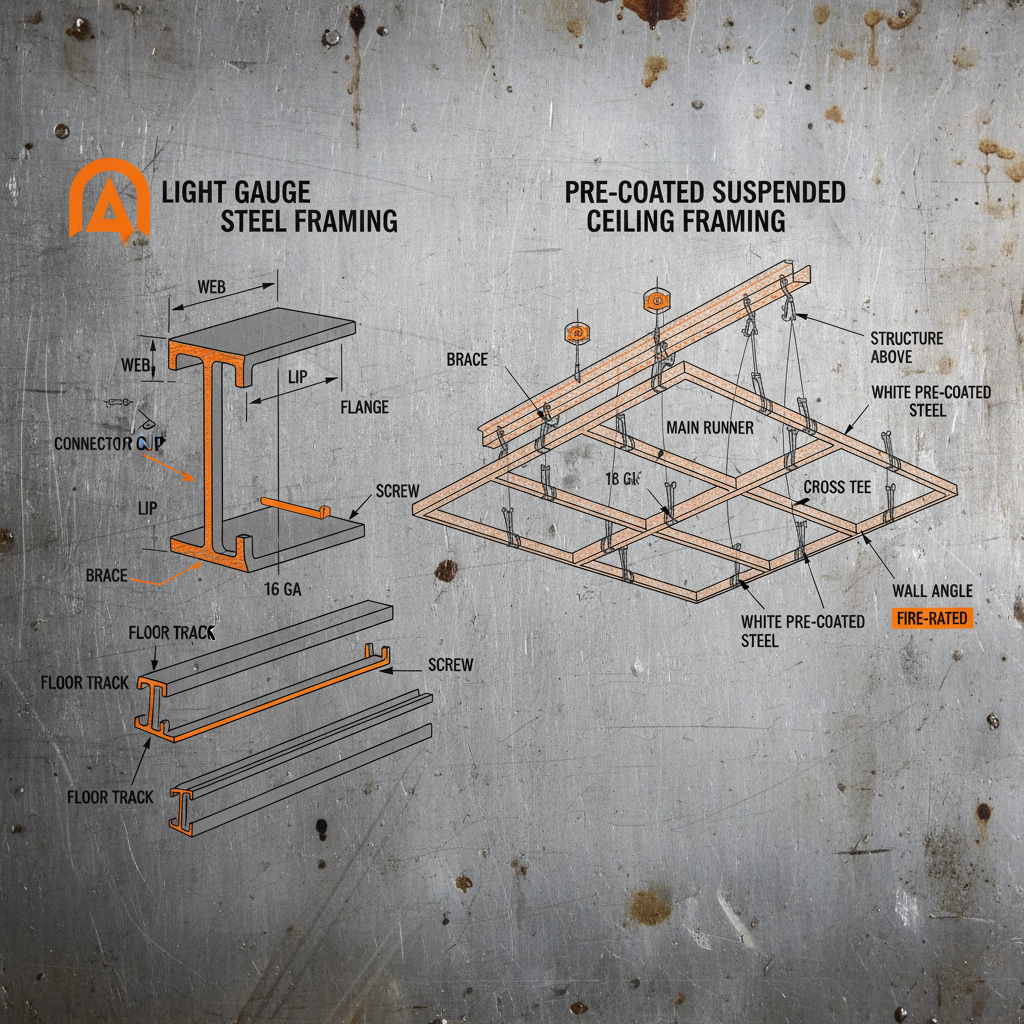
At its simplest level, metal framing gauges refer to the thickness of the steel used to manufacture studs, tracks, and furring channels. In the steel industry, the gauge system is inverse; this means that the higher the gauge number, the thinner the metal. For instance, a 20-gauge profile is significantly thinner and more flexible than a 16-gauge profile, which is designed for heavy-duty structural support.

Choosing the right thickness is not merely about strength but about the specific functional requirements of the wall or ceiling. For non-load-bearing partitions, thinner gauges provide a lightweight and cost-effective solution, whereas structural walls require thicker gauges to prevent bowing and to support the weight of heavy cladding or integrated mechanical systems.

Global Standards and Industry Relevance

The global construction market relies on standardized metal framing gauges to ensure interoperability between components manufactured in different regions. Organizations like ISO and ASTM provide the benchmarks that allow a project in North America using the Canada-US Drywall System to share the same engineering logic as a project in Asia or Europe. This standardization reduces the risk of structural failure and streamlines the international supply chain.

Current industry data indicates a growing preference for cold-formed steel (CFS) over traditional wood framing due to its precision and resistance to termites and rot. In rapidly urbanizing regions, the adoption of precise steel gauges has enabled the construction of taller, safer buildings that can be assembled much faster than those using traditional masonry. This shift is essential for meeting the housing demands highlighted by UN Habitat and other global development goals.

However, a common challenge arises when contractors confuse different gauge standards (such as the difference between US Standard and US Gauge). This discrepancy can lead to ordering materials that are slightly too thin for the intended load, potentially compromising the safety of the installation. Educating the workforce on these distinctions is critical for maintaining the integrity of modern architectural projects.

Key Factors Influencing Gauge Selection

When determining the appropriate metal framing gauges for a project, durability is the primary consideration. Thicker steel profiles offer superior resistance to impact and deformation, which is vital for corridors in hospitals or schools where walls are frequently bumped by carts or equipment.

Cost efficiency plays a secondary but pivotal role. While heavier gauges provide more strength, using them in areas where they aren't required leads to unnecessary expenditures and increased building weight. Professionals must balance the structural needs of the CD-UD System or Flat T Grids with the budget constraints of the client to achieve an optimal build.

Scalability and ease of installation also hinge on the gauge. Thinner profiles are easier to cut and manipulate on-site, accelerating the installation process for ceilings and partitions. Conversely, for high-ceiling industrial zones, the increased rigidity of thicker metal framing gauges reduces the need for additional bracing, potentially saving time during the framing phase.

Performance Metrics of Different Steel Gauges

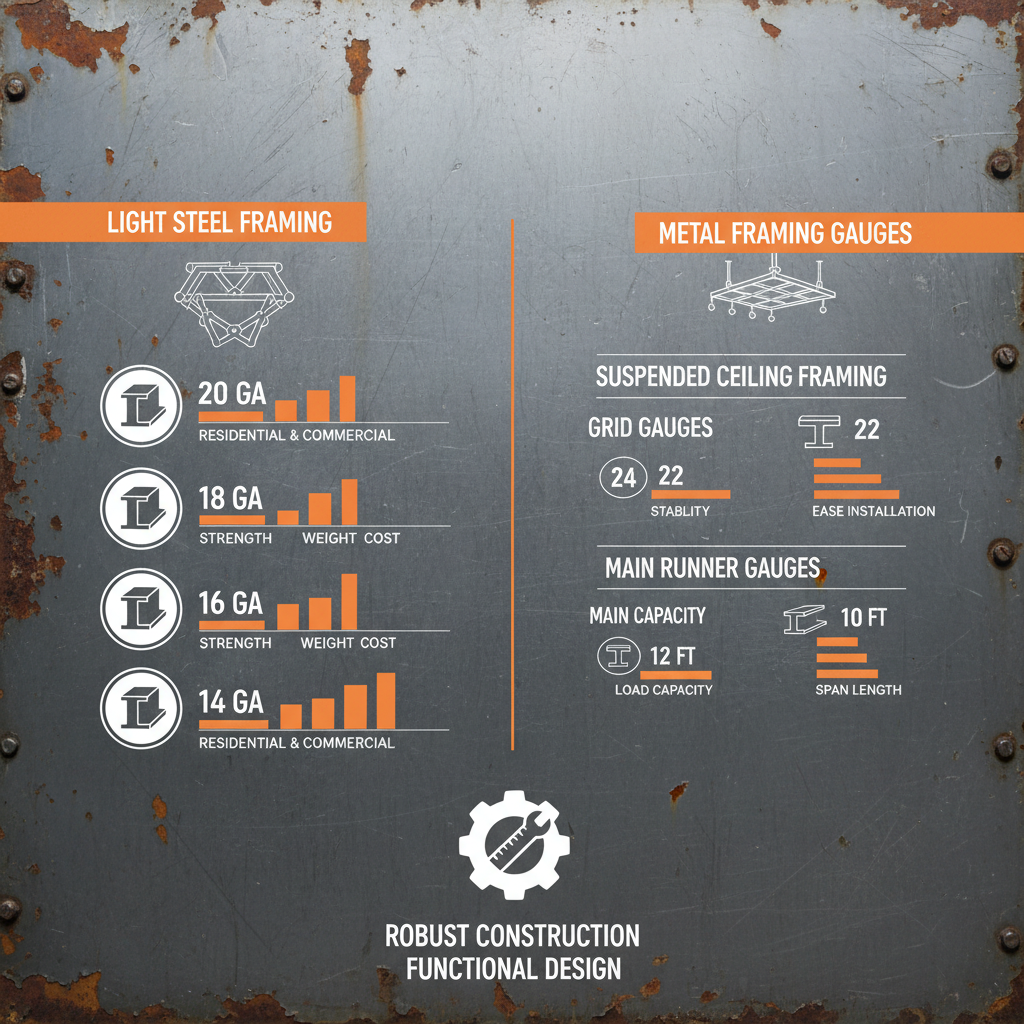
Evaluating the performance of metal framing gauges requires a look at their load-bearing capacity versus their flexibility. A lower gauge (thicker steel) provides a higher moment of inertia, meaning the profile is less likely to bend under pressure. This is a critical metric for the "Ultra Lined" or "Black Lined" systems where aesthetic perfection and flatness are non-negotiable.

In contrast, higher gauge (thinner) profiles are optimized for agility and speed. They are ideal for residential ceilings or lightweight partitions where the primary goal is to provide a substrate for gypsum boards rather than to support vertical loads. The following chart illustrates the comparative rating of various gauge applications based on industry performance standards.

Performance Comparison of Metal Framing Gauges Applications

Real-World Applications Across Global Systems

The application of specific metal framing gauges varies significantly by region due to differing architectural styles and environmental demands. In Australia, the Australian Drywall System emphasizes rigidity to withstand diverse climatic shifts, often opting for gauges that provide a balance between weight and strength. In the Middle East, the Furring System is engineered to handle high thermal expansion, necessitating precise gauge control to prevent warping.

Moreover, in remote industrial zones or post-disaster reconstruction, the use of standardized, lightweight steel gauges allows for rapid deployment. Prefabricated components like the South American System can be shipped in bulk and assembled quickly on-site, providing dignified and safe housing or office spaces in a fraction of the time required for traditional construction. This versatility makes the correct gauge selection a tool for both economic growth and humanitarian aid.

Long-Term Value and Sustainability Benefits

Investing in the correct metal framing gauges offers immense long-term value through reduced maintenance costs. A wall framed with an insufficient gauge may develop cracks in the drywall over time as the steel bows, leading to expensive repairs. By selecting the appropriate thickness from the start, developers ensure the structural integrity of the building for decades, fostering trust with tenants and owners.

From a sustainability perspective, steel is one of the most recycled materials on the planet. Unlike timber, which often ends up in landfills, steel profiles can be melted down and reused indefinitely without losing their properties. Using precise gauges also reduces "over-engineering," ensuring that only the necessary amount of material is used, thereby lowering the carbon footprint of the overall construction project.

Beyond the logical benefits of cost and environment, there is an emotional angle of safety. Knowing that a ceiling system—such as a Ceiling T Bar or Flat T Grid—is held up by steel that meets rigorous gauge standards provides peace of mind to the people living and working beneath it. This reliability is the foundation of innovation in modern architecture.

Future Innovations in Steel Profile Engineering

The future of metal framing gauges is being shaped by the digital transformation of the construction industry. Building Information Modeling (BIM) now allows engineers to simulate loads with extreme precision, enabling the use of "variable gauge" systems where steel thickness changes based on the specific stress points of a wall, further optimizing material use and reducing costs.

Additionally, new coating technologies are being integrated into the steel manufacturing process. High-zinc coatings and anti-corrosive layers are being applied to specific gauges to increase their lifespan in humid or coastal environments. This ensures that systems like the Small Furring System used in South Asia can withstand extreme moisture without compromising their structural gauge.

Automation in manufacturing is also leading to tighter tolerances. We are moving toward a world where the variance in metal framing gauges is almost zero, allowing for "click-and-lock" assembly systems that eliminate the need for excessive screws and fasteners. This evolution will make the transition to green energy buildings faster and more efficient.

Analysis of Metal Framing Gauges by Application and Region

System Type Typical Gauge Range Primary Load Requirement Durability Score (1-10)
Australian Drywall 0.45mm - 0.75mm Medium Vertical 8
Canada-US System 0.55mm - 1.2mm High Structural 9
Ceiling T Bar 0.3mm - 0.5mm Light Overhead 6
Furring System (ME) 0.4mm - 0.6mm Thermal Expansion 7
South American Sys 0.5mm - 0.8mm Modular Rigidity 8
Flat T Grids 0.35mm - 0.55mm Suspended Load 7

FAQS

What is the difference between a 20-gauge and a 25-gauge steel profile?

In the context of metal framing gauges, a 20-gauge profile is thicker and stronger than a 25-gauge profile. The gauge system is inverse, so lower numbers indicate thicker metal. A 20-gauge stud is typically used for walls that require more structural integrity or will support heavier finishes, while a 25-gauge stud is used for lightweight, non-load-bearing interior partitions where cost and weight reduction are priorities.

How do I know which metal framing gauge to use for a commercial ceiling?

The choice depends on the ceiling's span and the weight of the materials being suspended (e.g., acoustic tiles vs. heavy drywall). For standard T-bar systems, thinner gauges are common, but for large open-plan offices with heavy integrated lighting, a mid-range gauge is recommended. Always refer to the local building code and the specific technical datasheet of the system, such as the Flat T Grids T24, to ensure safety.

Can using a thinner gauge reduce the overall cost of my project?

Yes, using a higher gauge (thinner steel) generally reduces material costs and shipping weights. However, this should only be done where structural requirements allow. Using a gauge that is too thin can lead to wall bowing, cracking drywall, and potential safety failures, which would ultimately increase costs through repairs and liability. Balance is key to achieving true cost-efficiency.

Are metal framing gauges different across international standards?

Yes, there are slight differences between US Standard Gauge, US Gauge, and metric measurements (mm). For example, a "gauge" in one country might differ by a few hundredths of a millimeter from another. To avoid errors, it is best to specify the required thickness in millimeters (mm) when ordering internationally to ensure the profiles fit your specific system, whether it's the Canada-US or the South Asian system.

Does the gauge affect the fire rating of a drywall system?

While the gypsum board provides the primary fire barrier, the metal framing gauges contribute to the system's stability during a fire. Thicker gauges are less likely to warp or collapse under extreme heat, which helps the wall maintain its structural integrity longer, preventing the fire from spreading to adjacent rooms. Always consult fire-rated assembly guides for specific gauge requirements.

How do I verify if the steel I received matches the ordered gauge?

The most accurate way to verify metal framing gauges is using a digital micrometer or a calibrated gauge tool. Measure the thickness of the steel at multiple points along the profile. Additionally, check the manufacturer's mill certification report, which should accompany the shipment and list the actual measured thickness of the batch against the nominal gauge ordered.

Conclusion

Understanding and applying the correct metal framing gauges is an essential skill for any modern builder, architect, or project manager. From the structural rigidity required in the Canada-US Drywall System to the lightweight efficiency of Ceiling T Bars, the gauge of the steel is the invisible backbone that ensures safety, durability, and aesthetic quality. By balancing technical requirements with cost-efficiency and sustainability, professionals can create spaces that are not only functional but also built to last.

As the industry moves toward more sustainable and digitally-integrated construction methods, the precision of steel profiles will only become more critical. We encourage contractors to move beyond "standard" choices and instead specify gauges based on precise load calculations and environmental needs. For high-quality, standardized steel profiles and expert guidance on the right gauges for your next project, visit our website: www.jinkaibm.com.

Michael Johnson

Michael Johnson

Michael Johnson is a Senior Production Manager at Wen'an Jinkai Building Materials. He’s responsible for overseeing the operation of our 99+ automated production lines, ensuring efficient and standardized manufacturing. Michael focuses on optimizing production workflows, maintaining quality control, and ensuring adherence to GB/T13381.1-92 and GB/G14823.1-93 standards. He’s been with Jinkai for ten years and has a deep understanding of the entire manufacturing process. Michael is dedicated to continuous improvement, consistently identifying opportunities to enhance productivity and reduce waste.
Previous Benefits and Innovation of Lightweight Steel Frame Building
Next Understanding Metal Stud Framing Gauges for Modern Construction

If you are interested in our products, you can choose to leave your information here, and we will be in touch with you shortly.