Hit enter to search or ESC to close
Volatility in raw material costs and shifting architectural demands have made the 2x4x8 metal studs price a critical focal point for commercial contractors and project managers. As the industry moves away from traditional timber framing toward galvanized steel solutions, understanding the intersection of pricing, structural gauge, and long-term asset value has become essential for maintaining project margins.
The shift is driven by more stringent fire safety codes and the need for precision in multi-occupancy buildings. While the initial procurement cost is a primary concern, the engineering reality is that structural integrity and installation speed often outweigh the nominal price difference between standard and premium profiles. This tension creates a complex decision matrix for buyers who must balance budget constraints with building longevity.
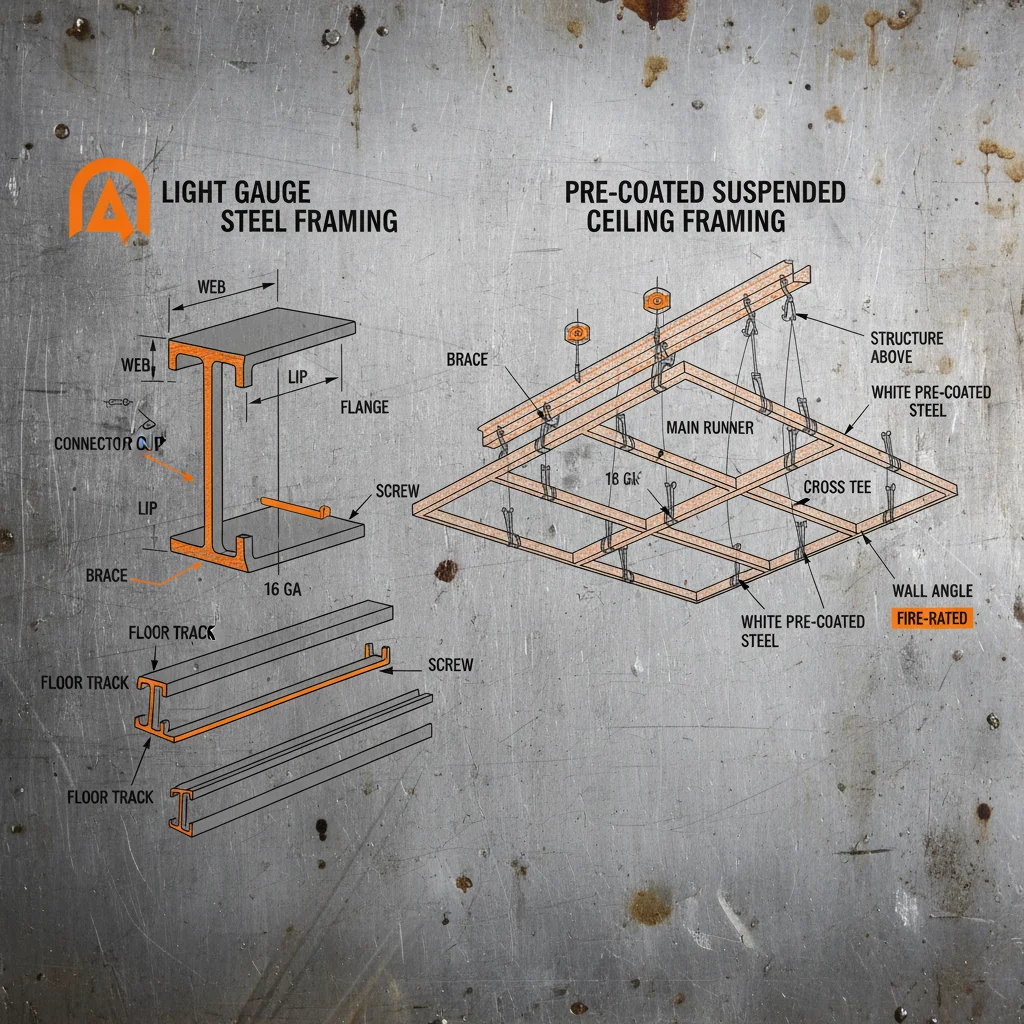
This analysis examines the technical variables that influence cost structures in light steel framing and explores how high-performance ceiling systems, such as the Narrow Flat T15 Ceiling T-Grid, provide a complementary structural approach to modern interior partitioning and suspended frameworks.


The pricing of 2x4x8 metal studs is fundamentally tied to the global price of hot-rolled coil steel and the energy costs associated with the cold-forming process. Beyond raw materials, the thickness of the galvanized layer—measured in zinc coating weight—plays a significant role in the final cost.
Precision in rolling and cutting technology also differentiates pricing. High-end automated production lines reduce waste and ensure consistent dimensions, which lowers the "hidden cost" of installation errors on-site.
In the context of light steel framing, the "gauge" refers to the thickness of the steel. A lower gauge number indicates a thicker, stronger stud. When evaluating 2x4x8 metal studs price, buyers often encounter a choice between 20-gauge and 25-gauge options. While thinner studs are cheaper, they possess lower load-bearing capacities and are more susceptible to bowing under heavy drywall loads.
From an engineering perspective, the selection of gauge must align with the wall height and the intended use of the space. For example, load-bearing walls in commercial hospitals require heavier gauges to support HVAC ducting and medical equipment, whereas simple partition walls in office interiors can utilize lighter profiles to optimize costs.
The trade-off extends to acoustic performance. Heavier steel profiles provide a more rigid foundation for sound-dampening insulation, reducing the transmission of low-frequency noise between rooms. This makes the higher initial investment in thicker studs a strategic decision for high-end institutional builds.
The durability of steel framing is dependent on its finish. Standard galvanization is sufficient for most dry environments, but specialized coatings are required for high-moisture areas. The cost of these finishes is often a variable that separates economy studs from professional-grade components.
For procurement officers, the decision should be based on the "Life Cycle Cost" rather than the "Purchase Price." A cheaper, non-coated stud in a bathroom or laboratory setting will lead to premature rust and structural failure, necessitating expensive replacements that far exceed the initial savings.
Evaluating the value of framing components requires a normalized scoring system. Instead of focusing solely on the 2x4x8 metal studs price, engineers assess the ratio of structural strength to installation time.
The following assessment compares standard framing components against premium architectural systems across five key performance dimensions.
In typical commercial deployment, 2x4x8 metal studs serve as the primary vertical support for non-load-bearing partitions. In a high-density office layout, these studs are integrated with acoustic batting and double-layer gypsum board to create sound-isolated executive suites. The efficiency of this system depends on the tolerance of the studs; precision-manufactured profiles allow for faster alignment and reduced shim requirements.
In institutional settings such as schools or hospitals, the integration extends to the ceiling. The structural load is distributed between the wall studs and the suspended ceiling grid. Using a certified fire-rated system, like the Narrow Flat T15, ensures that the entire interior envelope—from the floor studs to the ceiling grids—complies with international building safety codes for multi-occupancy structures.
The industry is shifting toward "Intelligent Framing," where BIM (Building Information Modeling) is used to pre-calculate the exact gauge required for every single wall in a building. This reduces material waste and allows contractors to purchase only the necessary strength levels, effectively optimizing the total expenditure on 2x4x8 metal studs price.
Another emerging trend is the use of high-tensile, low-alloy steels. These materials provide the strength of a heavy gauge with the weight of a light gauge, potentially reducing the shipping cost and carbon footprint of large-scale construction projects.
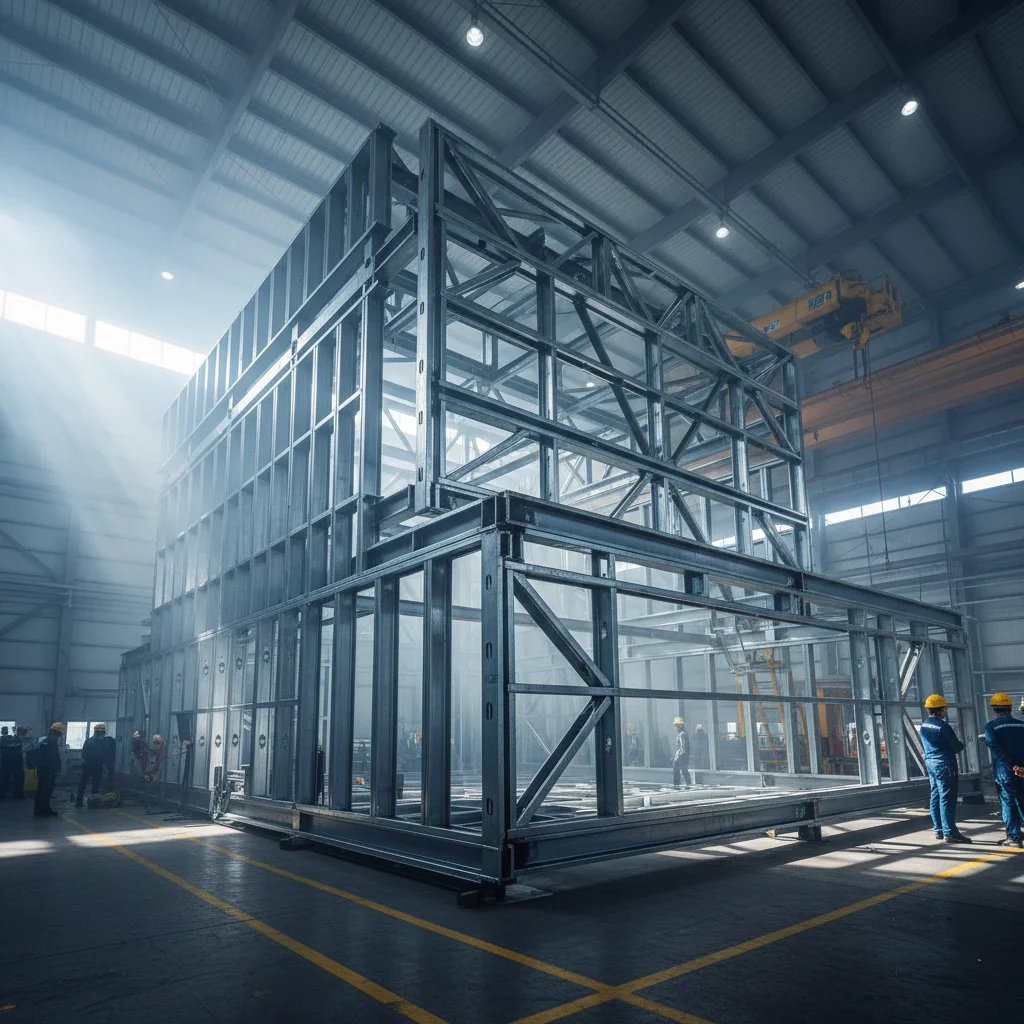
Finally, there is a growing demand for modularity. Prefabricated wall panels, where studs and tracks are assembled in a factory environment using automated rolling technology, are becoming the standard for rapid-deployment commercial builds, shifting the value proposition from raw material price to assembly efficiency.
Selecting the right framing components requires a systematic comparison of configuration types. Buyers must distinguish between "Economy," "Standard," and "High-Duty" profiles based on the project's risk profile and environmental constraints.
The following matrix provides a decision framework for matching technical configurations to specific architectural needs, ensuring that budget optimization does not compromise structural integrity.
By aligning the product specification with the actual load and moisture requirements, developers can increase the overall building rating and long-term asset value.
| Configuration Type | Typical Gauge/Spec | Environmental Suitability | Recommended Use Case |
|---|---|---|---|
| Economy Profile | 25 Gauge / Std Galv | Low Humidity / Dry | Interior Office Partitions |
| Standard Profile | 20 Gauge / Z120 | General Commercial | Retail and Residential Walls |
| High-Duty Profile | 18 Gauge / Z275 | High Load / Industrial | Warehouse Dividers |
| Moisture-Resistant | Special Coating | High Humidity / Clinical | Hospital / Bathroom Walls |
| Fire-Rated System | Certified Thick Gauge | High Occupancy / Public | School / Institutional Corridors |
| Precision Modular | Toleranced / Automated | Rapid Deployment | Prefabricated Office Pods |
The price is primarily driven by the cost of cold-rolled steel coils and the gauge (thickness) of the profile. Additional cost variables include the zinc coating weight for corrosion resistance and the precision of the manufacturing process. Higher gauges (thicker steel) naturally command a higher price but offer superior structural load-bearing capacity and acoustic isolation.
Selection depends on the wall height and load requirements. 25-gauge is suitable for light-duty interior partitions where cost is a primary driver. 20-gauge is recommended for taller walls or those supporting heavier fixtures. Engineers typically calculate the maximum allowable deflection to determine if the lower-cost 25-gauge option meets building code requirements.
Yes, provided that the steel is treated with a high-performance corrosion-resistant coating. Standard galvanized steel may rust in clinical or bathroom settings. For these areas, specify profiles with specialized finishes or higher zinc coatings. Similarly, the Narrow Flat T15 Ceiling T-Grid is engineered with moisture-protection coatings specifically for these environments.
While the steel itself is non-combustible, the gauge affects the stability of the wall assembly during a fire event. Thicker gauges maintain structural integrity longer under high heat, preventing premature collapse. When combined with certified fire-rated gypsum board and ceiling grids, they form a comprehensive fire-containment envelope.
Automated production lines ensure that every stud has a consistent thickness and perfectly square ends. This precision eliminates the need for manual adjustments during installation, which significantly reduces labor costs. High-quality automated rolling prevents "oil-canning" or warping, ensuring a flat surface for drywall attachment.
Do not compare based on price alone. Check the specific steel grade, the zinc coating weight (G40, G60, or G90), and the manufacturing tolerances. Ensure the supplier provides certification of compliance with international standards. A slightly higher price per unit may be offset by lower wastage rates and faster on-site installation.
Analyzing the 2x4x8 metal studs price reveals that the most economical choice is rarely the cheapest unit price, but rather the one that optimizes the balance between material gauge, corrosion resistance, and installation speed. In modern commercial architecture, the integration of high-performance framing and suspended ceiling systems is the only way to ensure long-term compliance with safety codes and building longevity.
For developers and contractors, shifting the focus toward "Engineering Value" allows for the reduction of maintenance costs and the increase of total asset valuation. By utilizing precision-manufactured components and certified systems like the Narrow Flat T15, projects can achieve a professional, seamless finish that withstands the rigors of high-traffic commercial environments.