Hit enter to search or ESC to close
November 7, 2025
In the intricate world of modern architecture and interior design, often the most crucial components are those that remain largely unseen. Among these unsung heroes is the ceiling grid wire – a fundamental element responsible for the structural integrity and aesthetic appeal of suspended ceiling systems across countless commercial, industrial, and institutional spaces. Far from being a mere afterthought, the quality and specification of this seemingly simple wire dictate not only the lifespan and maintenance requirements of an entire ceiling installation but, more critically, the safety of occupants below. A compromised or improperly selected wire can lead to catastrophic failures, resulting in significant financial losses, disruptions, and, tragically, potential injuries. The inherent challenge lies in balancing initial project costs with long-term performance and regulatory compliance. This discussion aims to dissect the multifaceted importance of investing in superior ceiling grid wire, examining its technical underpinnings, the rigorous standards it must meet, and the profound impact it has on the overall safety and functionality of a building. We will explore how meticulous attention to this critical component elevates projects from merely adequate to truly exemplary, ensuring stability and peace of mind for decades to come.
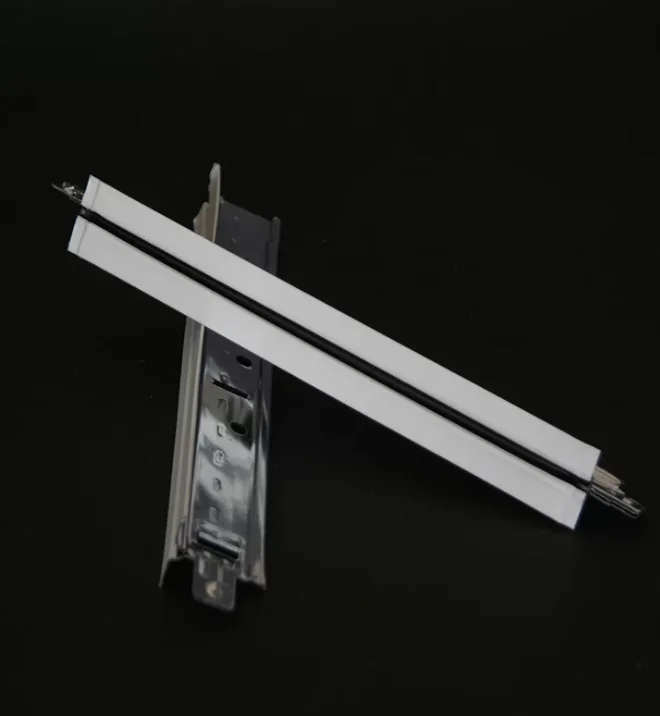
The resilience and longevity of a suspended ceiling system are fundamentally rooted in the technical prowess and material science of its components, particularly the suspension wires. High-grade ceiling grid wires are not merely strands of metal; they are precision-engineered products designed to withstand constant static loads, dynamic stresses, and environmental factors over extensive periods. The primary material choice for these wires is typically galvanized steel, selected for its exceptional strength-to-weight ratio and corrosion resistance. Premium wires often utilize hot-dip galvanized steel, characterized by a thick, durable zinc coating (e.g., G90 specification, meaning 0.90 oz/ft² of zinc) that forms a metallurgical bond with the steel substrate. This process significantly outperforms electro-galvanized alternatives, which offer a thinner, less robust coating susceptible to premature rust in humid or corrosive environments. For instance, studies indicate that hot-dip galvanized steel can extend corrosion protection by up to 70% compared to thinner coatings, translating directly into enhanced structural integrity and reduced replacement cycles. Beyond galvanization, the wire's gauge (diameter) is critical, influencing its tensile strength and load-bearing capacity. Wires ranging from 12 to 18 gauge are common, with lower numbers indicating thicker, stronger wires. A typical 12-gauge galvanized steel wire can exhibit a tensile strength exceeding 90,000 PSI, providing substantial safety margins. Furthermore, some specialized applications demand stainless steel wires, particularly in environments prone to extreme humidity, chemical exposure, or stringent hygiene requirements, like healthcare facilities or food processing plants. These technical distinctions, though often invisible once installed, collectively contribute to a suspension system that is not only structurally sound but also remarkably resilient against the relentless march of time and environmental degradation.
The role of ceiling suspension wires extends far beyond simply holding up a ceiling grid; it encompasses a complex interplay of load capacity, safety factors, and adherence to stringent industry standards. Engineers meticulously calculate the static and dynamic loads a suspended ceiling system must bear, including the weight of the grid, acoustic panels, light fixtures, HVAC ductwork, and even potential seismic forces. Crucially, a safety factor is always applied, typically ranging from 2:1 to 5:1, meaning the wire's ultimate breaking strength must be several times greater than the anticipated maximum load. For instance, if a section of ceiling is calculated to carry 100 pounds, the supporting wires and connections must collectively be capable of handling 200 to 500 pounds before failure. This robust engineering ensures that even under unforeseen stresses, the system remains stable. Compliance with standards such as ASTM C635 (Standard Specification for the Manufacture, Performance, and Testing of Metal Suspension Systems for Acoustical Tile and Lay-in Panel Ceilings) and ASTM C636 (Standard Practice for Installation of Metal Suspension Systems for Acoustical Tile and Lay-in Panel Ceilings) is non-negotiable. These standards dictate material specifications, load testing protocols, and installation methodologies. A comprehensive report by the National Association of Home Builders (NAHB) revealed that inadequate ceiling suspension systems are a contributing factor in an estimated 8% of non-structural building failures annually, leading to property damage exceeding $50 million and numerous preventable injuries. Moreover, in seismic zones, specialized bracing and wire configurations are mandated to prevent collapse during an earthquake, often requiring wires to withstand lateral forces without permanent deformation. Understanding and strictly adhering to these load capacity principles and safety standards is paramount, safeguarding not only the integrity of the building but also the well-being of its occupants.
The market for ceiling grid wire is populated by various manufacturers, each offering products with distinct characteristics, quality assurances, and price points. Choosing the right supplier is a critical decision that impacts project budgets, installation timelines, and long-term performance. While specific brand names vary by region and distribution channels, we can categorize manufacturers based on their typical offerings and market positioning. A direct comparison across key attributes helps in identifying the optimal choice for specific project requirements, balancing cost-effectiveness with unwavering reliability.
Feature / Category | Premium Manufacturer (e.g., Brand X) | Standard Manufacturer (e.g., Brand Y) | Economy Manufacturer (e.g., Brand Z) |
Material Quality & Coating | High-grade G90 hot-dip galvanized steel; consistent wire diameter; optional stainless steel. | G60-G90 galvanized steel; slight variations in coating thickness possible. | Lower grade (e.g., G40-G60) electro-galvanized or lighter hot-dip; potential inconsistencies. |
Certifications & Compliance | Full ASTM C635/C636 compliance, UL listed, ICC-ES recognized, LEED contribution data. | Meets basic ASTM C635/C636; may have some regional certifications. | Minimal certifications; often relies on manufacturer self-declaration. |
Gauge Options | Comprehensive range (e.g., 8-18 gauge); specialized heavy-duty options. | Standard commercial gauges (e.g., 10-16 gauge). | Limited range, often thinner gauges (e.g., 14-18 gauge). |
Corrosion Resistance | Excellent; designed for demanding environments with extended warranties. | Good for general indoor environments. | Basic; suitable for dry, low-stress interior applications. |
Warranty & Support | Extensive product warranties (e.g., 10-25 years); dedicated technical support. | Standard warranties (e.g., 1-5 years); general customer service. | Limited or no explicit warranty; minimal support. |
Price Point (Relative) | Higher initial investment, but exceptional long-term value. | Mid-range; good balance of cost and performance. | Lowest initial cost; higher risk of premature failure and replacement. |
Lead Times & Availability | Generally excellent for standard products; custom orders may require more time. | Good for common specifications. | Variable; sometimes dependent on batch production. |
Ultimately, the choice hinges on project-specific demands, budget constraints, and risk tolerance. For critical infrastructure, high-traffic areas, or environments with specific environmental challenges, the investment in a premium manufacturer’s product pays dividends in safety, durability, and reduced lifecycle costs. For less demanding applications, a standard manufacturer might suffice, while economy options should be approached with caution, often being suitable only for temporary installations or areas where long-term performance is not a primary concern.
Modern architecture is characterized by its diversity, with each project presenting unique structural, aesthetic, and functional requirements. Recognizing this, leading manufacturers of ceiling suspension components offer extensive customization options, transforming the standard ceiling grid wire into a highly adaptable solution. This goes beyond mere gauge selection, encompassing specialized lengths, unique finishes, and integration with complex building systems. For instance, pre-cut wires can be supplied in specific lengths, significantly reducing on-site labor and material waste, which contributes to more efficient project completion and reduced overall costs. Imagine a large-scale commercial project requiring thousands of wires; pre-cutting could cut installation time by 15-20% and material waste by up to 10%. Furthermore, wires can be coated with PVC or other polymers in various colors, not only to meet aesthetic requirements for exposed grid systems but also to provide additional corrosion resistance in challenging environments or for color-coding purposes during complex installations. In areas requiring enhanced hygiene, such as laboratories or cleanrooms, specialized antimicrobial coatings can be applied. For seismic bracing, specific high-tensile wires or even twisted wire constructions are available to absorb and dissipate energy more effectively during an earthquake. Moreover, manufacturers work closely with architects and contractors to develop bespoke connection hardware, ensuring seamless integration with non-standard ceiling panels, complex lighting schemes, or integrated fire suppression systems. This level of customization ensures that the suspension system can be precisely tailored to the demands of any architectural vision, providing not just structural support, but also contributing to the overall design, functionality, and longevity of the space.
The true testament to the quality and versatility of ceiling suspension wires lies in their performance across a spectrum of real-world applications. From the quiet corridors of a healthcare facility to the bustling floors of a retail giant, these wires silently bear the load, maintaining safety and contributing to the desired environmental conditions. Consider the following diverse scenarios:
· Healthcare Facilities (e.g., St. Jude Children's Research Hospital): In hospitals, sterile environments and critical infrastructure demand uncompromising reliability. Suspension wires in operating rooms and patient wings must not only support heavy medical equipment integrated into the ceiling but also resist corrosion from cleaning agents and maintain structural integrity during seismic events. High-grade, often stainless steel or specialized G90 galvanized wires, are essential here, ensuring that life-saving equipment remains securely overhead and that ceilings do not pose contamination risks. The acoustic performance of ceilings, enabled by stable suspension, also contributes to patient comfort and privacy.
· Commercial Offices (e.g., Salesforce Tower, San Francisco): In high-rise commercial buildings, aesthetic appeal, acoustic performance, and adaptability for changing office layouts are paramount. Suspension wires here support modular ceiling tiles, integrated lighting, and often intricate HVAC systems. The ability to specify pre-cut lengths dramatically speeds up installation in vast office spaces, while robust wires ensure that the ceiling remains stable even with frequent reconfigurations or the addition of new fixtures. In seismic zones like San Francisco, earthquake-resistant wires and bracing systems are critical, safeguarding both property and lives.
· Educational Institutions (e.g., University Libraries): University libraries often feature large, open spaces with high ceilings, demanding robust suspension systems capable of spanning significant distances. Here, the emphasis is on durability, long-term stability, and sound absorption. High-gauge galvanized steel wires provide the necessary strength for extensive grid systems, supporting heavy acoustic panels that are vital for creating quiet study environments. Their resistance to environmental factors ensures decades of maintenance-free performance, enduring the daily wear and tear of thousands of students.
· Industrial Warehouses (e.g., Amazon Fulfillment Centers): In vast industrial settings, ceilings often house heavy lighting arrays, sprinkler systems, and complex conveyor belt infrastructure. The suspension wires here are subjected to significant static loads and potential vibrations. Heavy-duty, large-gauge galvanized wires, coupled with specialized attachment methods, are non-negotiable to prevent fatigue failure and ensure a safe working environment for hundreds of employees. The focus is purely on strength, reliability, and ease of installation over large areas.
· Retail Spaces (e.g., Shopping Malls): Retail environments prioritize aesthetics and flexibility. Ceiling grid wires support decorative panels, elaborate lighting schemes, and seasonal displays. The ability to integrate with diverse ceiling materials and support varying loads without compromising visual appeal is key. Customization in terms of wire finish or length allows designers to achieve specific aesthetic goals while maintaining structural integrity.
These diverse applications underscore that while the function of supporting a ceiling remains constant, the specific demands on the suspension wire vary dramatically, necessitating tailored solutions and unwavering commitment to quality.
The decision to specify high-quality ceiling grid wire often comes with a slightly higher initial procurement cost. However, viewing this through the lens of total cost of ownership (TCO) and long-term value reveals it to be a prudent and economically sound investment. Inferior wires, prone to corrosion, material fatigue, or insufficient load-bearing capacity, inevitably lead to premature failures. These failures necessitate costly repairs, often involving the dismantling and reinstallation of entire ceiling sections, disrupting operations, and incurring significant labor expenses. Beyond the tangible financial implications, there is the immeasurable cost of compromised safety. A ceiling collapse, even a partial one, can result in severe injuries, legal liabilities, and irreparable damage to an organization’s reputation. Consider a scenario where a premium suspension system might cost 10-15% more upfront but reduces maintenance calls by over 50% and extends the ceiling's lifespan by decades, the return on investment becomes strikingly clear. High-quality wires, manufactured to rigorous standards and backed by comprehensive warranties, offer unparalleled peace of mind. They ensure structural stability for decades, accommodate future changes or additions to the ceiling system with greater ease, and contribute positively to building certifications like LEED. Ultimately, the ceiling grid wire is not merely a commodity; it is a foundational component that underpins safety, functionality, and aesthetic longevity. Investing in premium solutions is therefore not an extravagance, but a fundamental commitment to building integrity and occupant well-being, delivering enduring value far beyond the initial purchase price.
Q1: What is ceiling grid wire used for?
A1: Ceiling grid wire, also known as hanger wire, is used to suspend the metal grid framework of a suspended (drop) ceiling system from the overhead structural framing (joists, trusses, or concrete slabs). This framework then supports acoustic panels, light fixtures, and other ceiling-mounted components.
Q2: What materials are ceiling grid wires typically made from?
A2: The most common material is galvanized steel, which provides excellent tensile strength and corrosion resistance. For highly corrosive environments or specialized applications, stainless steel wires are also used.
Q3: What does the gauge of the wire signify?
A3: The gauge refers to the wire's diameter. In the American Wire Gauge (AWG) system, a lower gauge number indicates a thicker, stronger wire. For ceiling suspension, common gauges range from 12 to 18, with 12-gauge being thicker and capable of supporting heavier loads than 18-gauge.
Q4: Are there specific standards or certifications for ceiling grid wire?
A4: Yes, reputable ceiling grid wire should comply with industry standards such as ASTM C635 (Standard Specification for the Manufacture, Performance, and Testing of Metal Suspension Systems for Acoustical Tile and Lay-in Panel Ceilings) and ASTM C636 (Standard Practice for Installation of Metal Suspension Systems for Acoustical Tile and Lay-in Panel Ceilings). UL listing and ICC-ES recognition are also important indicators of quality and safety.
Q5: How do I determine the correct wire gauge for my project?
A5: The correct wire gauge depends on the total dead load of the ceiling system (weight of grid, panels, fixtures), live loads (e.g., seismic forces), and local building codes. Consulting an engineer or adhering to manufacturer specifications and relevant ASTM standards is crucial to ensure adequate load-bearing capacity and safety factors.
Q6: Can ceiling grid wire be customized?
A6: Absolutely. Many manufacturers offer customization options including pre-cut lengths to minimize waste, specialized coatings (e.g., PVC for color or added corrosion resistance), and unique attachment hardware to integrate with specific ceiling systems or building designs.
Q7: What are the risks of using low-quality ceiling grid wire?
A7: Using low-quality wire increases risks of premature corrosion, material fatigue, and insufficient load capacity. This can lead to ceiling sag, system failure, costly repairs, operational disruptions, and, most critically, safety hazards including potential ceiling collapse and occupant injury.